Claudia Holzinger
July 2026
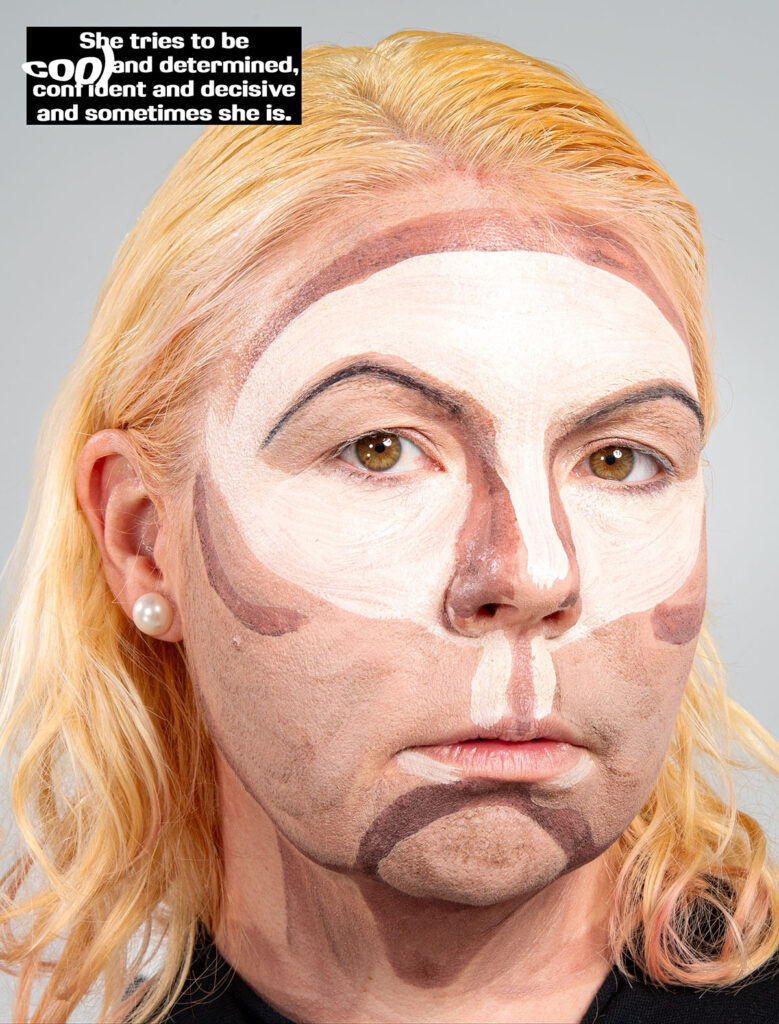
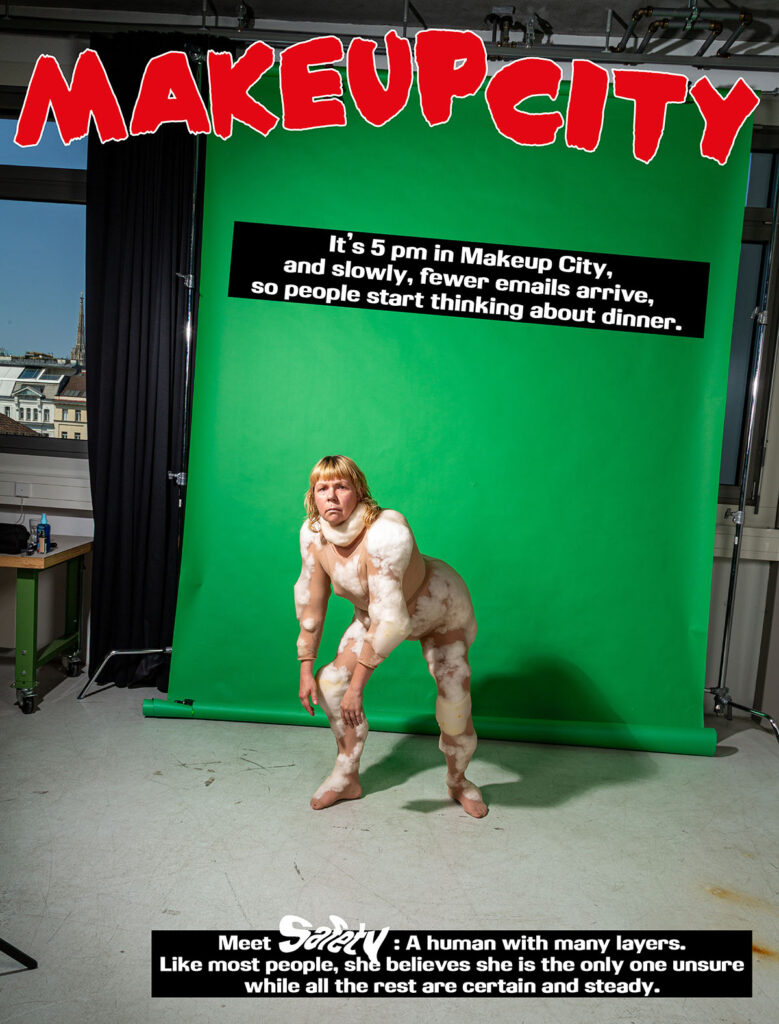
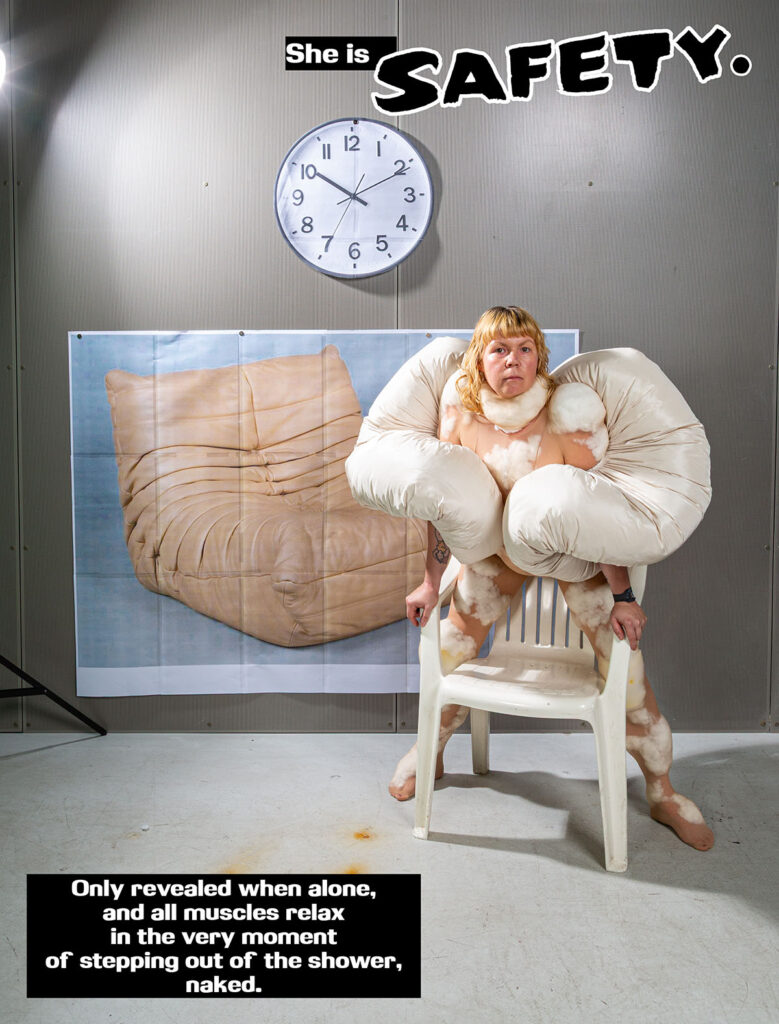
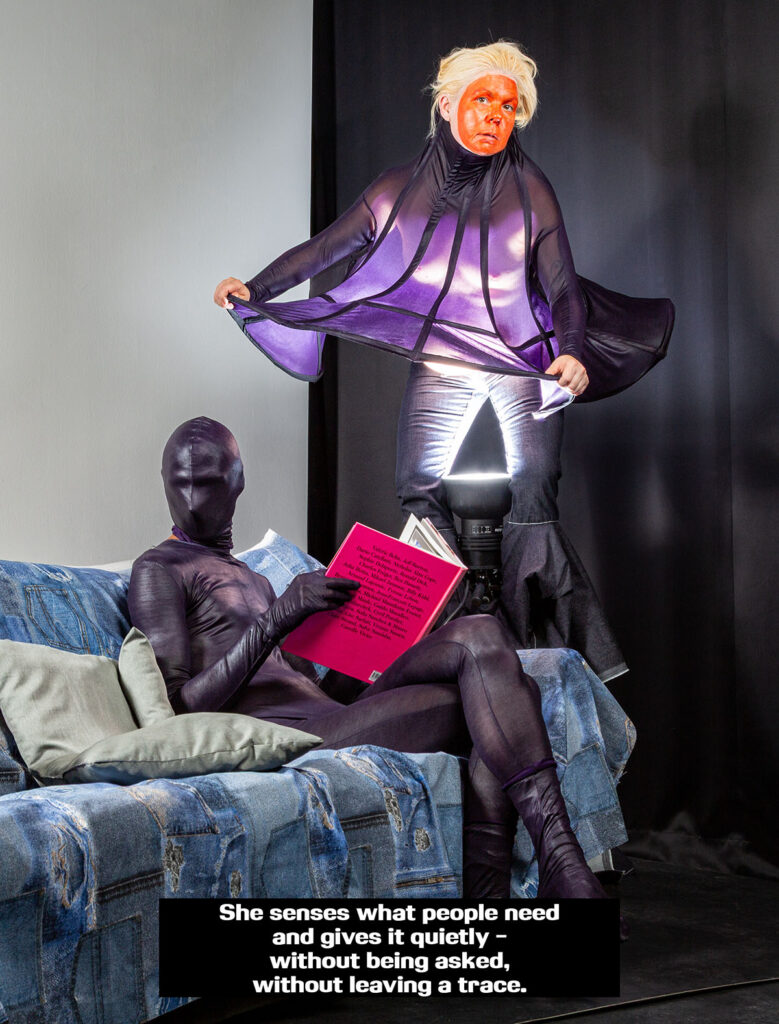
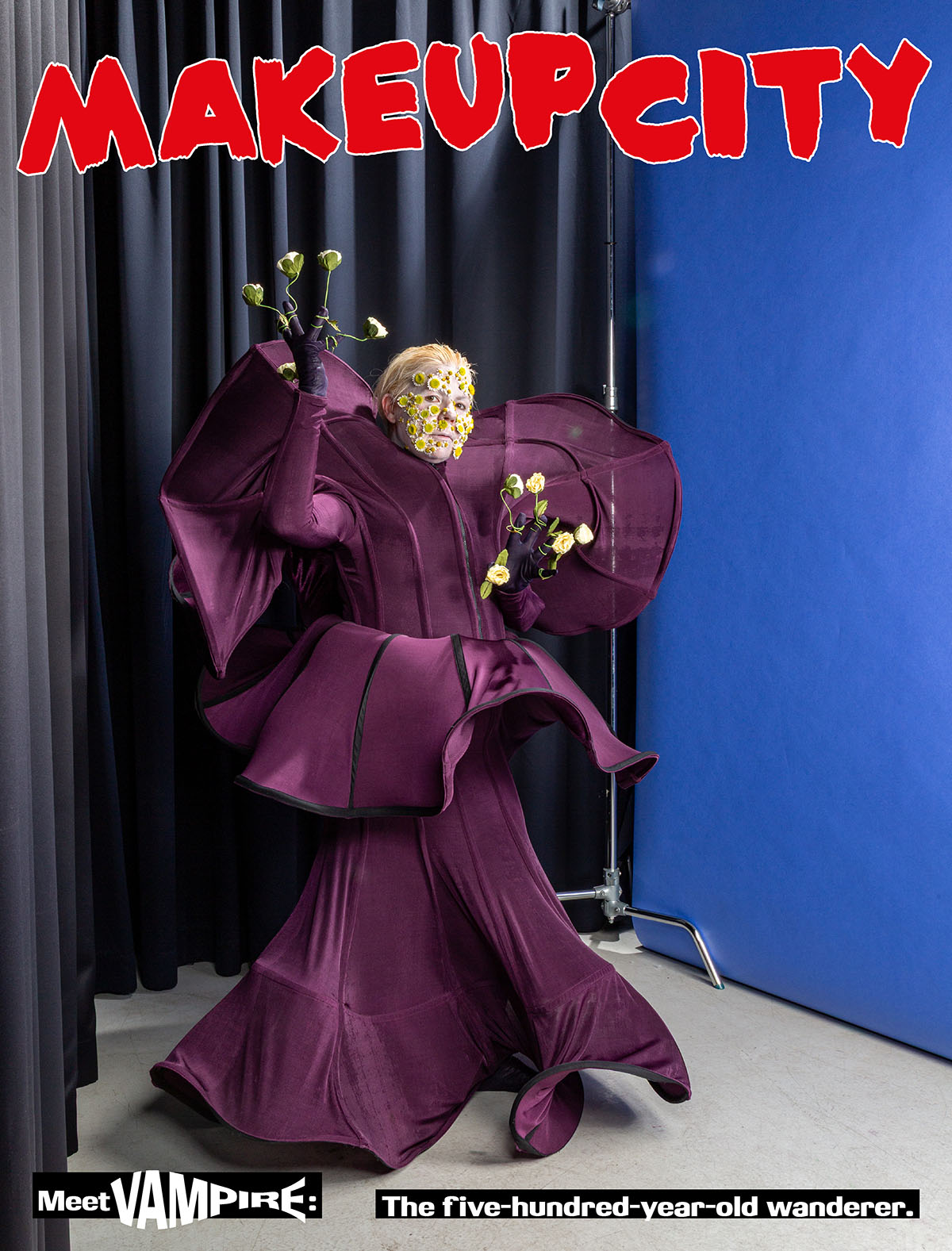
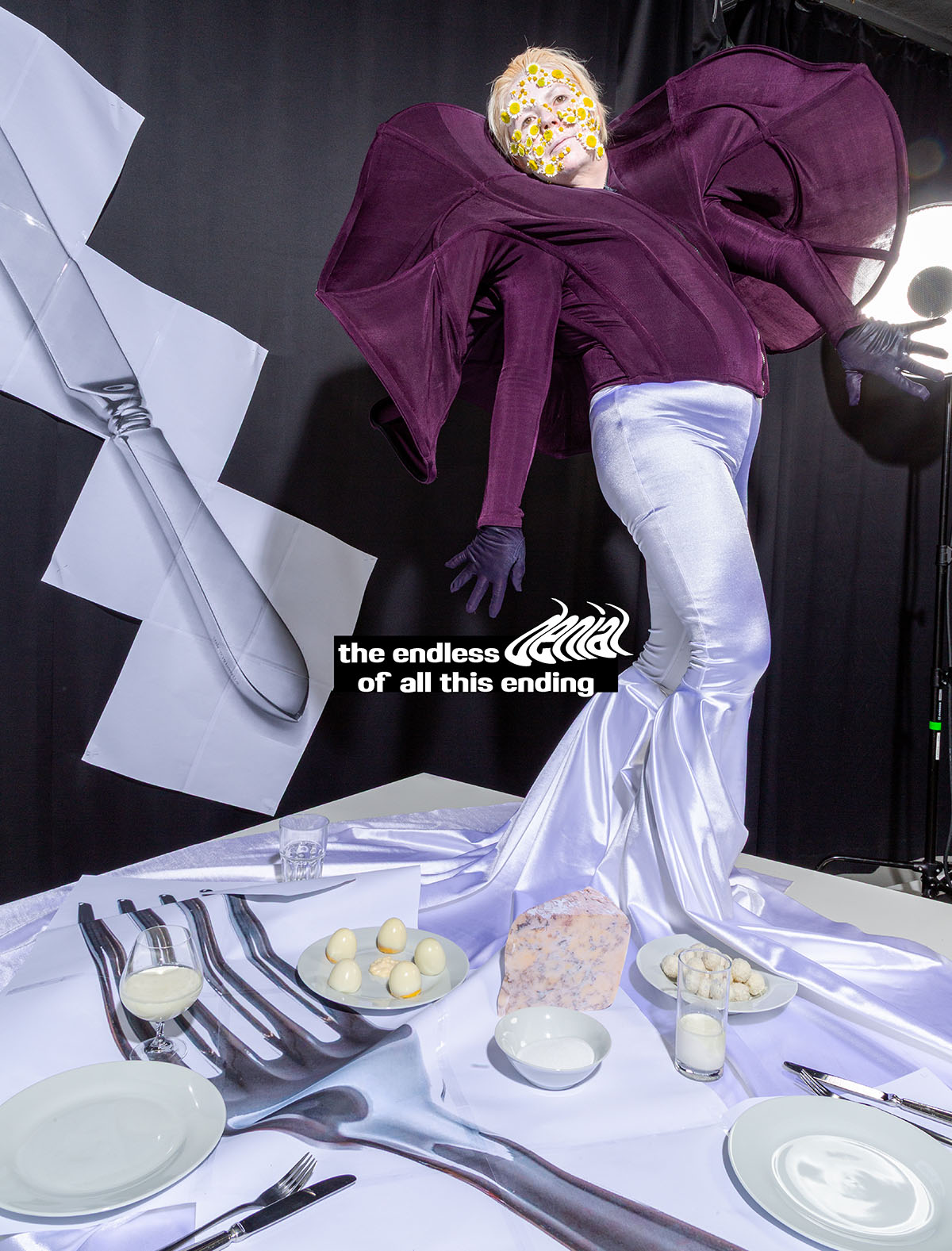
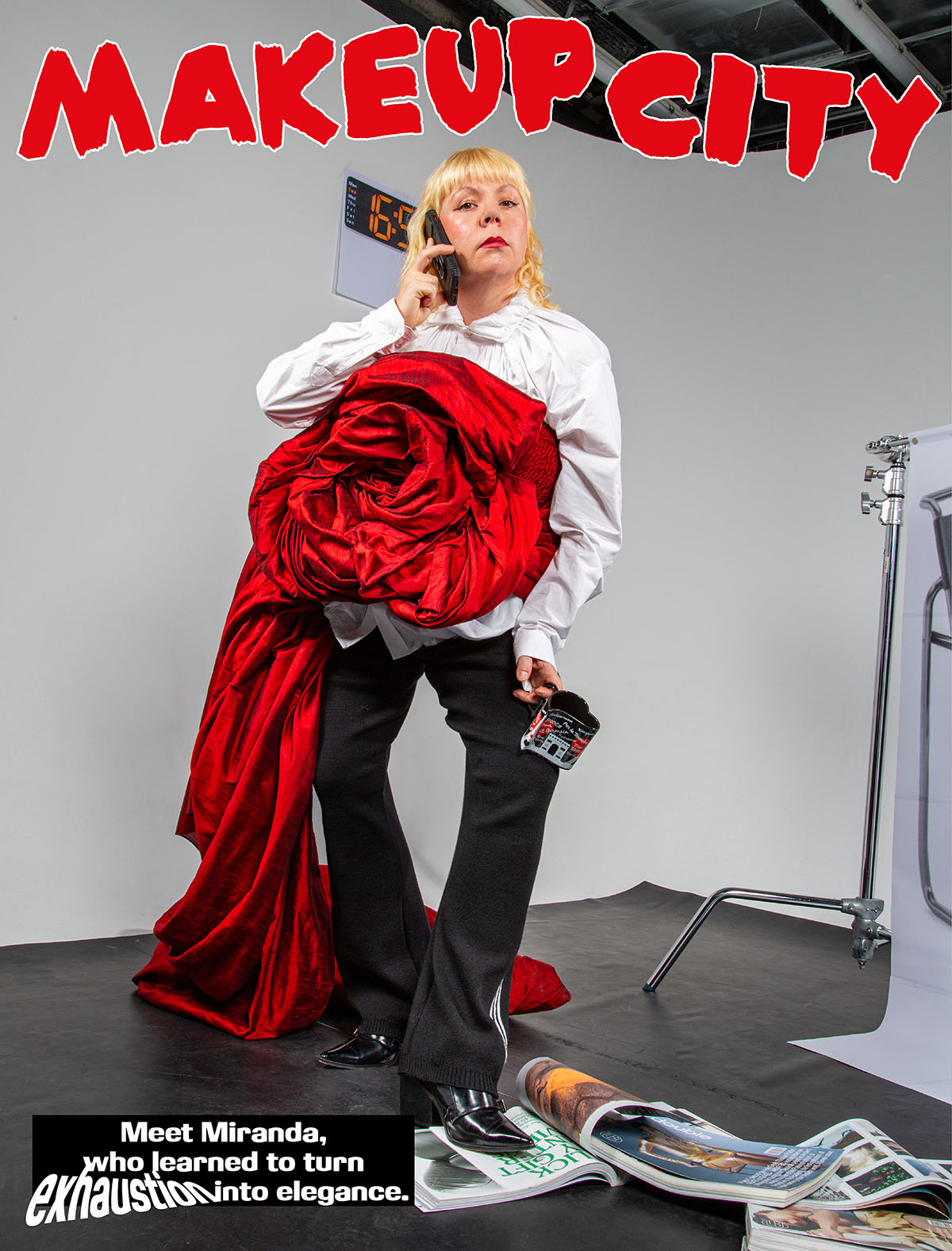
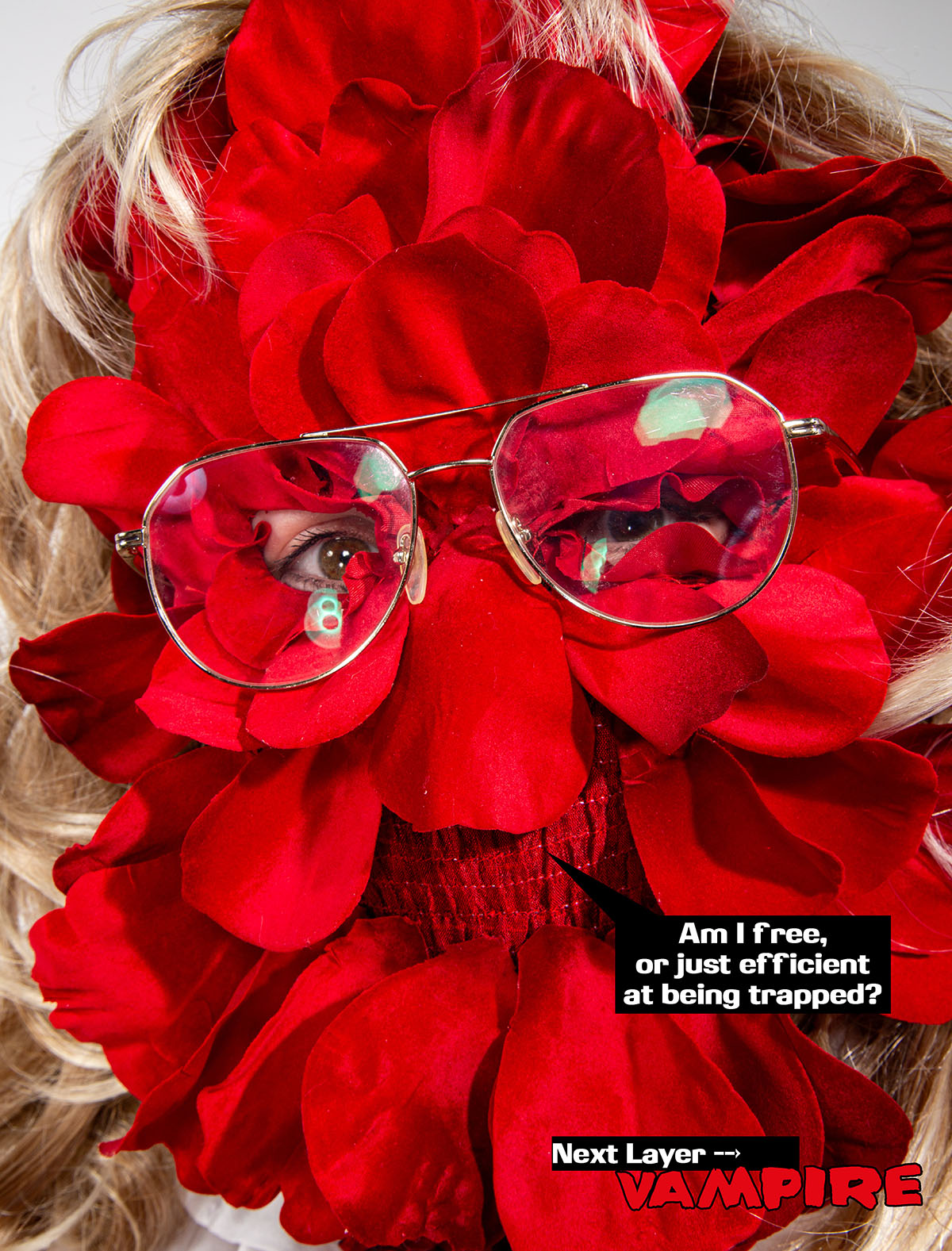
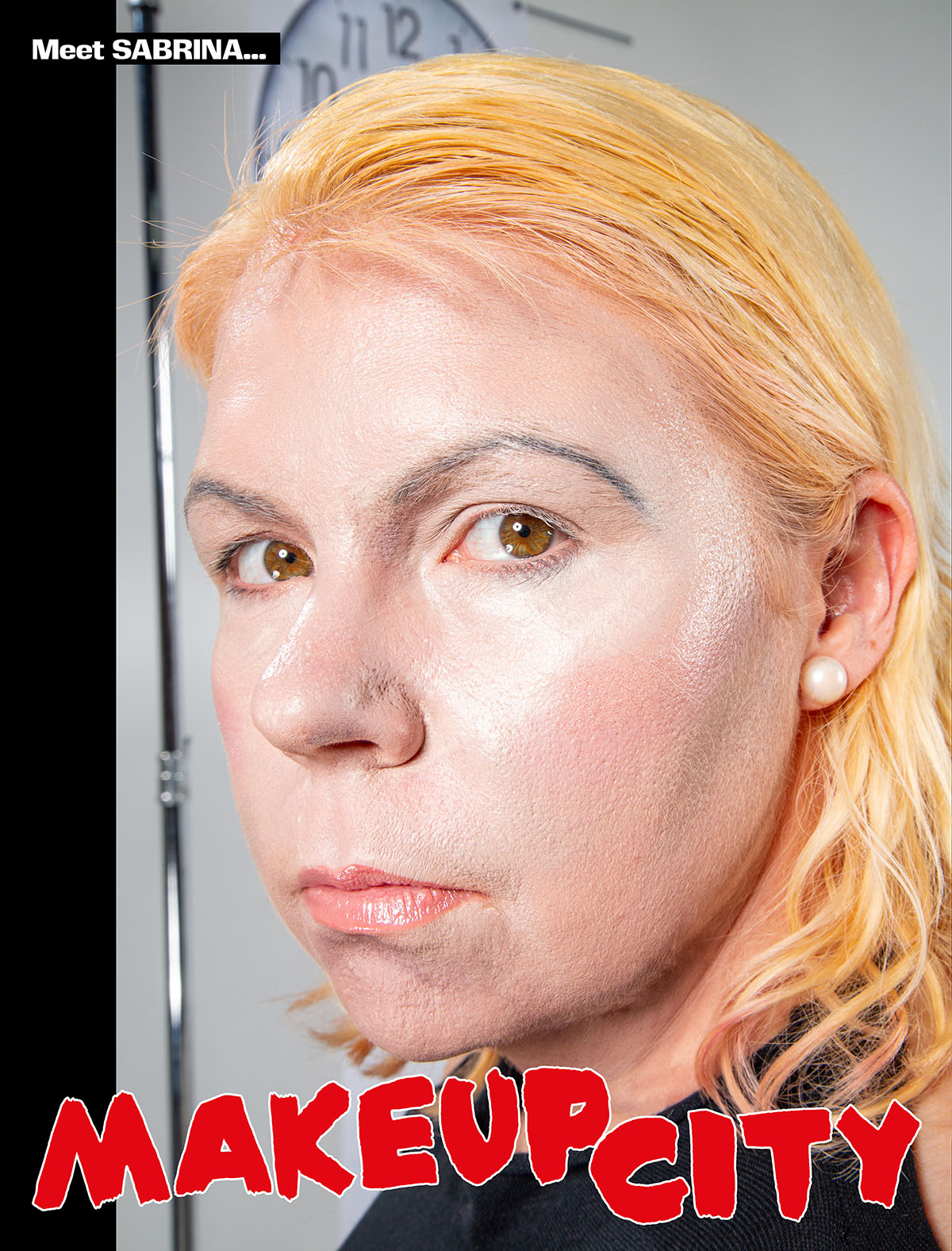
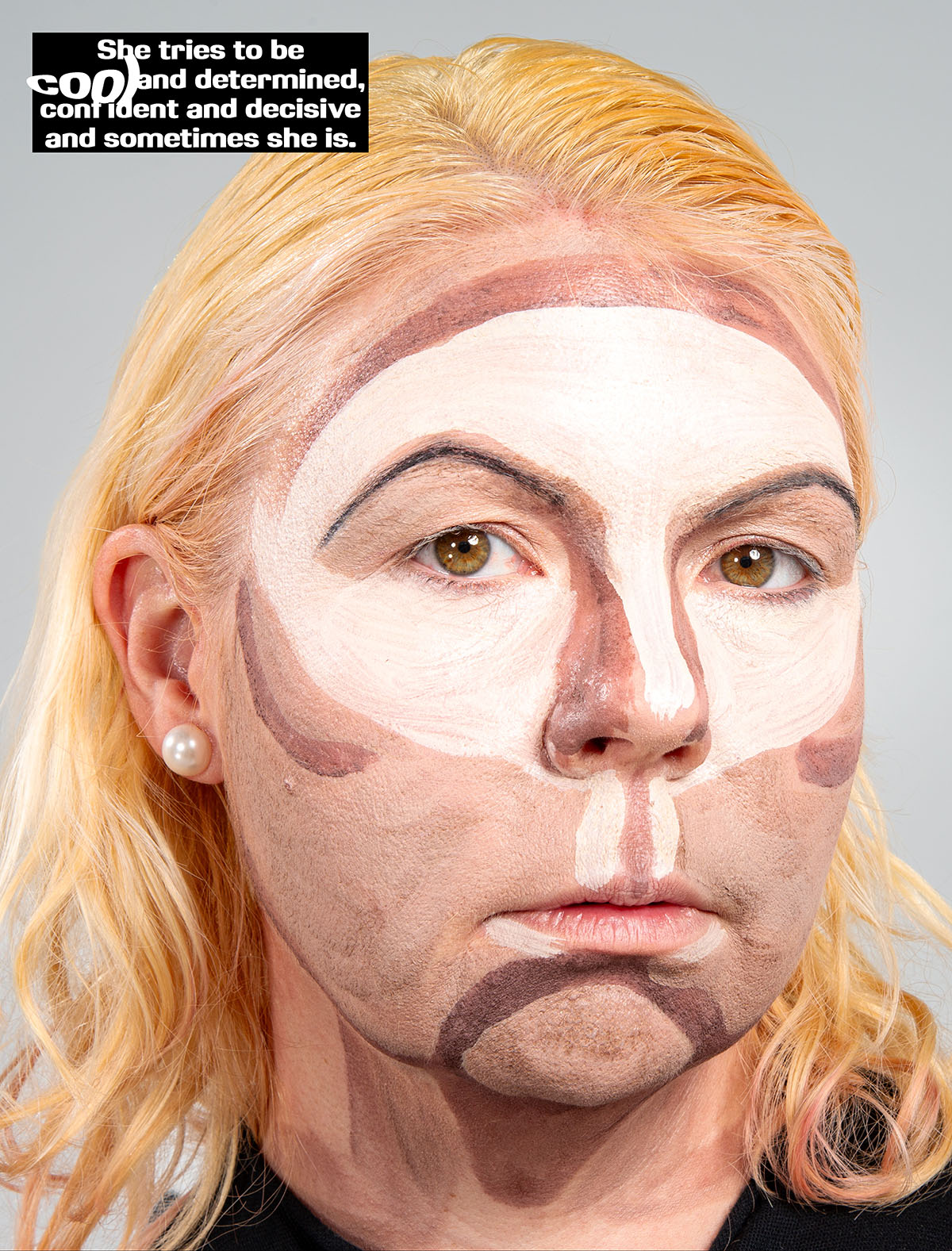
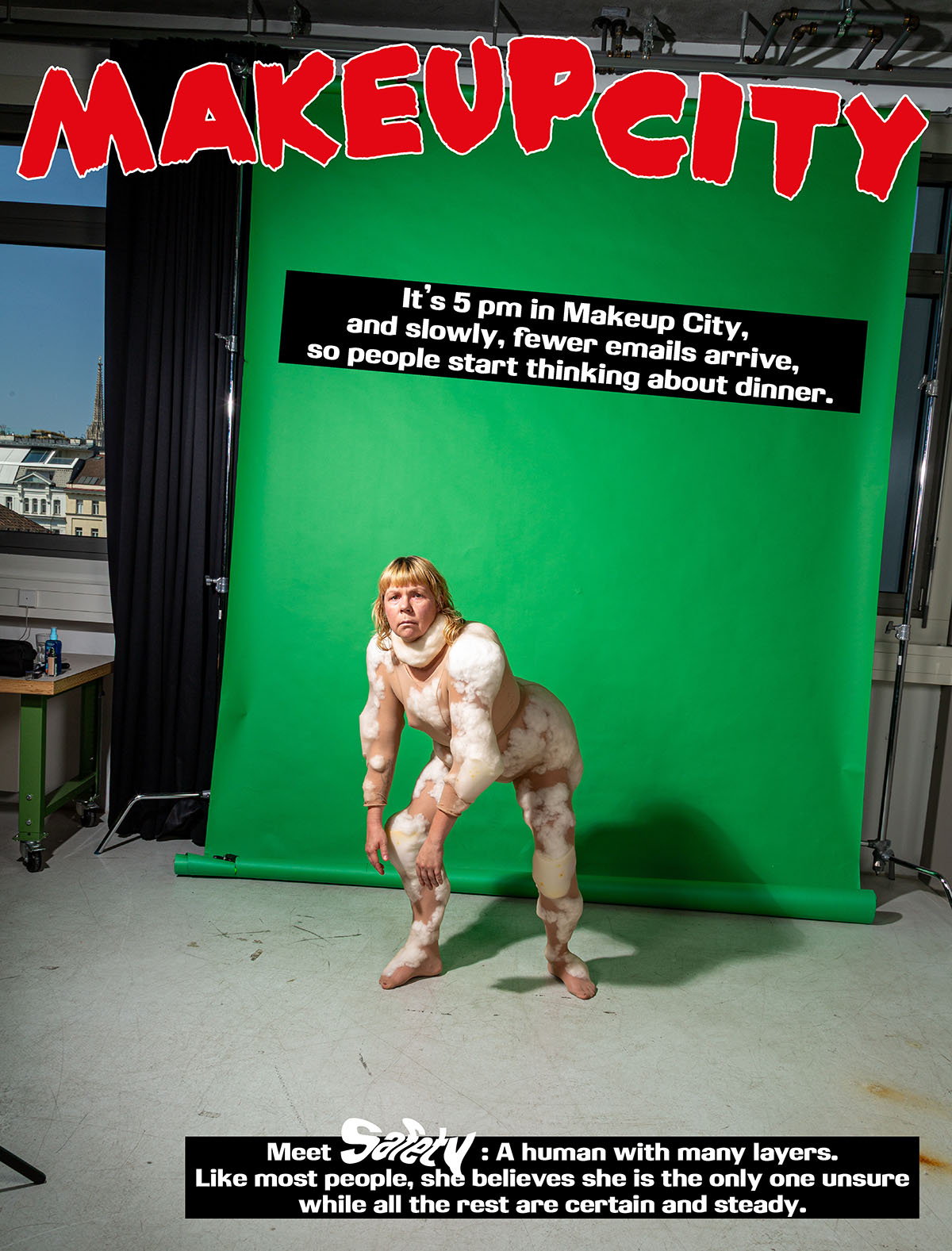
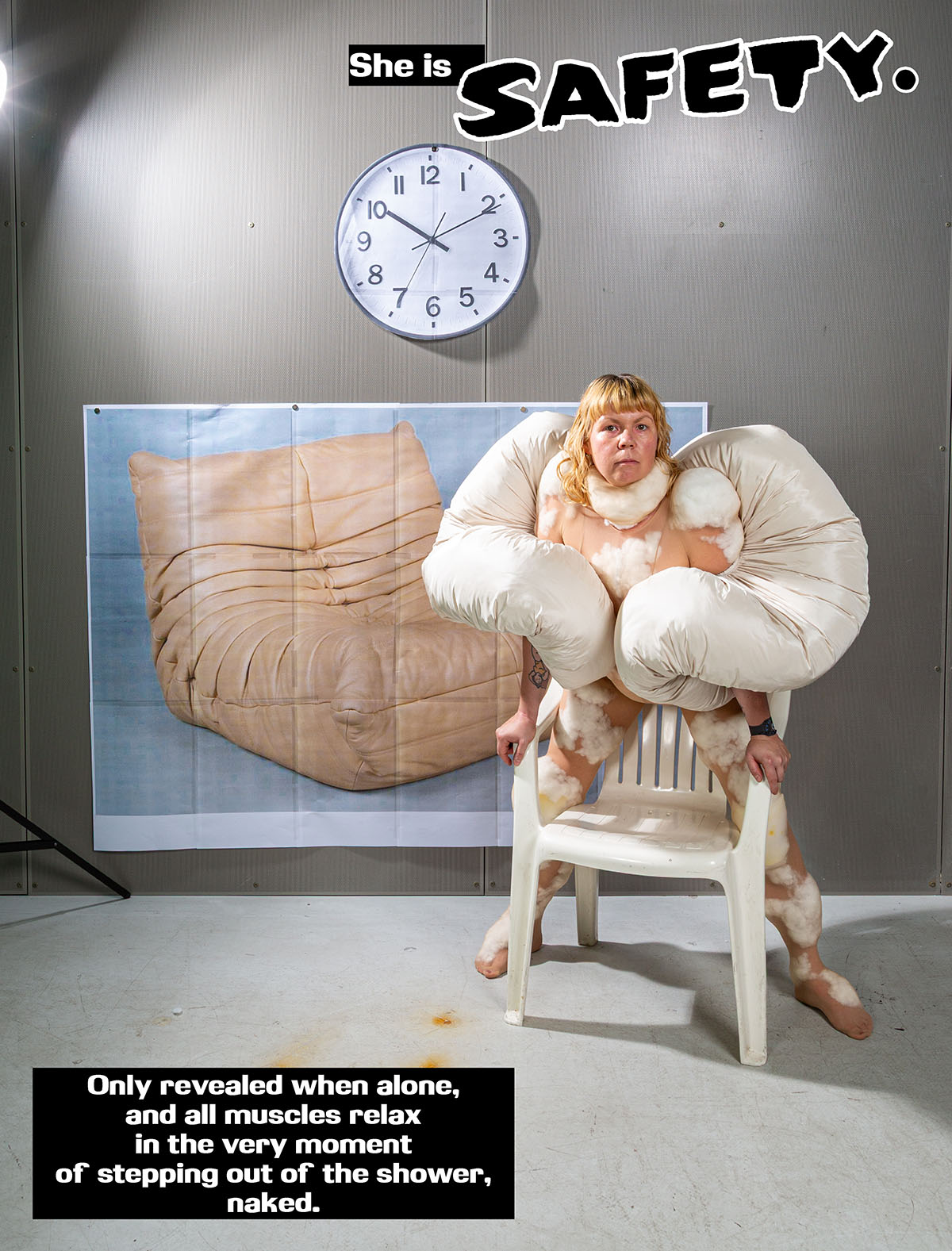
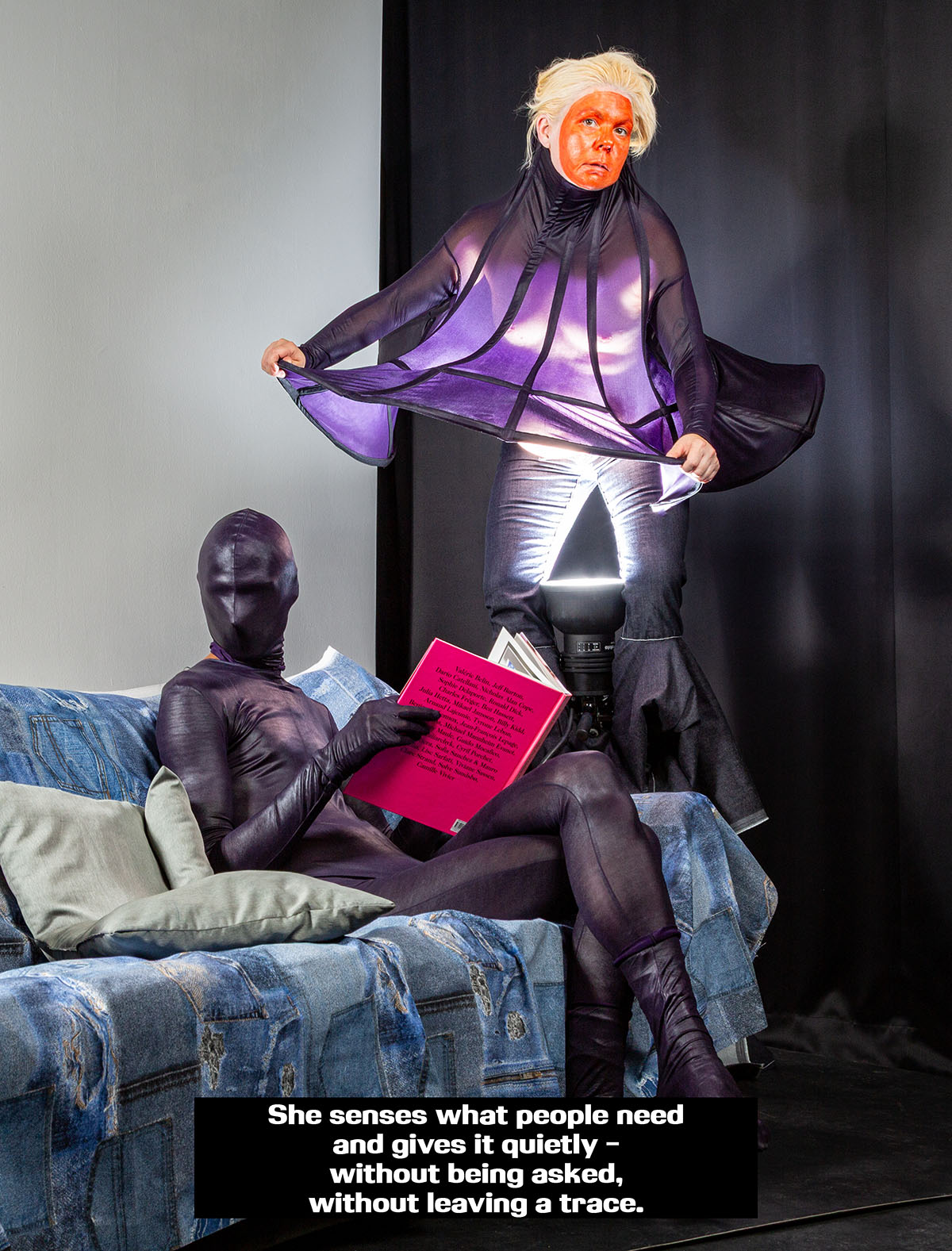
Claudia Holzinger understands her practice as performance for camera. Through costumes, body paint and self-staging, the Berlin-based artist constructs bodies that are flexible, unstable and deliberately funny, using humour as an entry point into the systemic mess of norms projected onto them. Temple asked her about authorship, lineage and telling new pictorial stories.
Fashion, Styling, Concept, Photography by Alessandro Santi
Photography, Make-Up by Dalmonia Rognean
Concept, Props, Model, Text, Graphic Design by Claudia Holzinger
Made possible with the support of Austrian Fashion Association
Temple Magazine
Your practice combines photography, installation, and performative self-staging. How do these three disciplines inform each other, and is there one that always acts as the starting point?
Claudia Holzinger
I understand my practice as performance for camera.
The camera functions as the eyes of an audience, which means that photography is not documentation but the intended outcome from the beginning. So far, this set-up is almost always the starting point of my work.
Most of the time, though not exclusively, I do self-portraits.
I often use costumes, make-up, and props to embody characters or roles, and I usually discover how these figures exist in the body, through posture, gesture, and expression, during the act of photographing itself. Working with my own body allows me to explore this directly and find it out in the moment the photographs are being made. If I do not yet know how a role is embodied, how could I clearly translate it into words and instruct someone else to perform it? Because of this, it often feels more coherent to work with myself as both subject and material.
Installation enters the process when the images encounter a viewer outside the digital. I rarely believe in the idea of photographs as flat images in a frame on a wall. Instead, I am interested in giving them a physical presence of their own. The installational aspect emerges through the way the images occupy space, and relate to their surroundings. In this sense, performance for camera (= photography) and installation are not separate disciplines in my practice but different stages of the same process.
Temple Magazine
And the body is central to your work, but rather than simply documenting it, you construct it through costumes, body paint, and mise en scène. What does this process of fabrication allow you to say about the body that straightforward representation wouldn't?
Claudia Holzinger
I think the body holds a strong humorous potential that is most of the time completely overlooked, because it is usually treated with excessive seriousness and rigid expectations. Certain body parts are supposed to look a particular way, fat is only accepted in some areas and rejected in others, while in reality the body continuously produces different, unpredictable forms that become even less controllable as we age, give birth, experience illnesses.
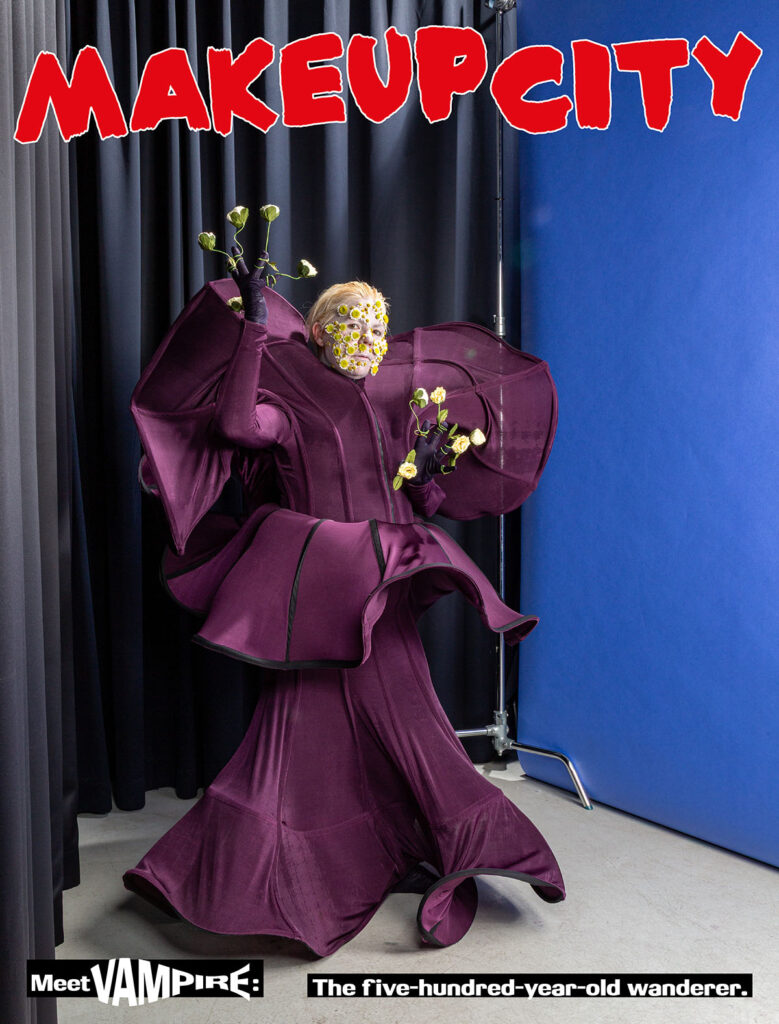
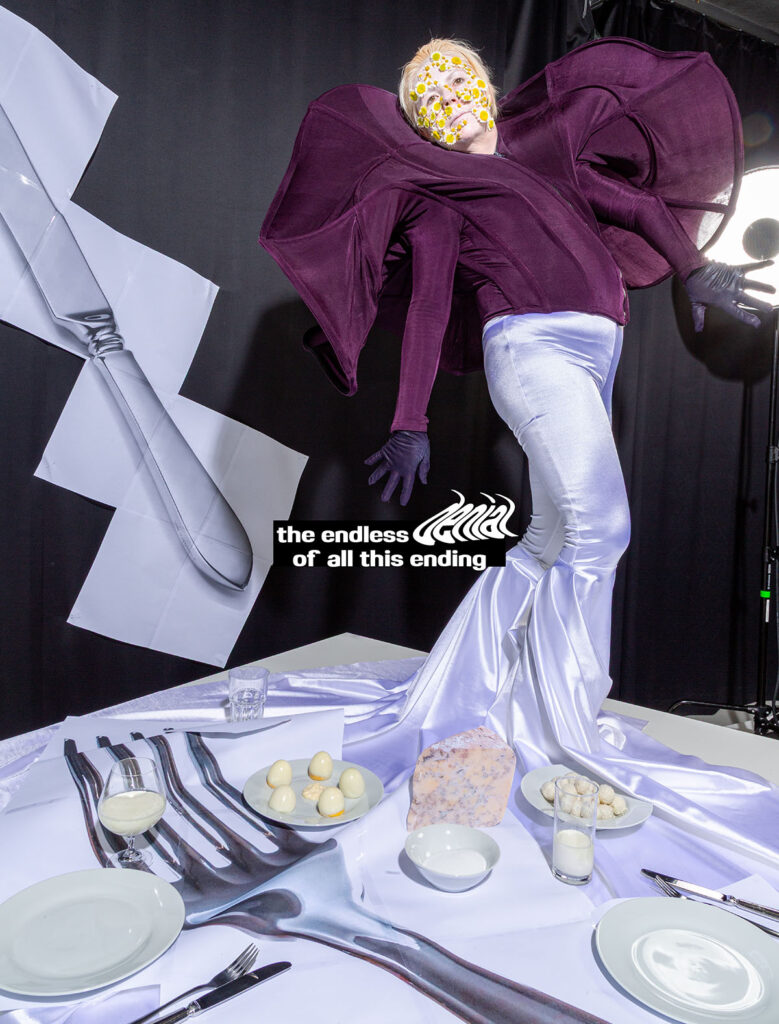
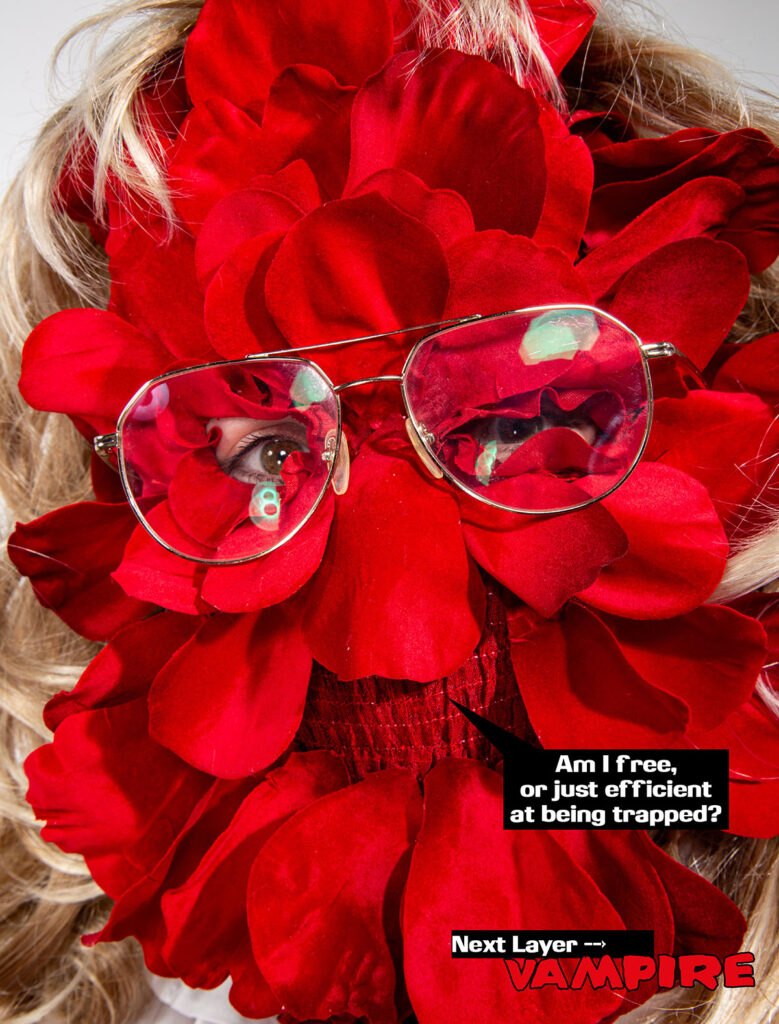
Costumes and body paint allow me to exaggerate and extend these conditions rather than simply documenting them. By pushing into unexpected or absurd forms, I draw attention to how constructed our ideas of a normal or natural body actually are. Through this, I question norms, disgusts, and limitations that are projected onto bodies. Rather than presenting the body as a fixed or correct form, I am interested in showing it as something flexible, unstable, transforming and funny.
Temple Magazine
You work both as a solo artist and within several collaborative structures (HOLZINGERurbat, SÜSSHOLZ, Femxphotographers.org). How do you navigate between the individual and the collective, and does working with others alter the way you think about authorship?
Claudia Holzinger
I think of all my work as collaborative in some form, even in projects, where I develop a concept mostly by myself. My thinking is always shaped by previous and parallel projects, as well as by the broader cultural context I am part of, which means what I read, watch, all the ideas produced by others that touch me somehow. In that sense, I find it difficult to see authorship as purely individual. Also in my self-portrait practice, I am rarely completely alone. There is usually at least one person who triggers the shutter while I handle staging and lighting. What may appear as a solo process is therefore also a form of collaboration, which I acknowledge in the credits.
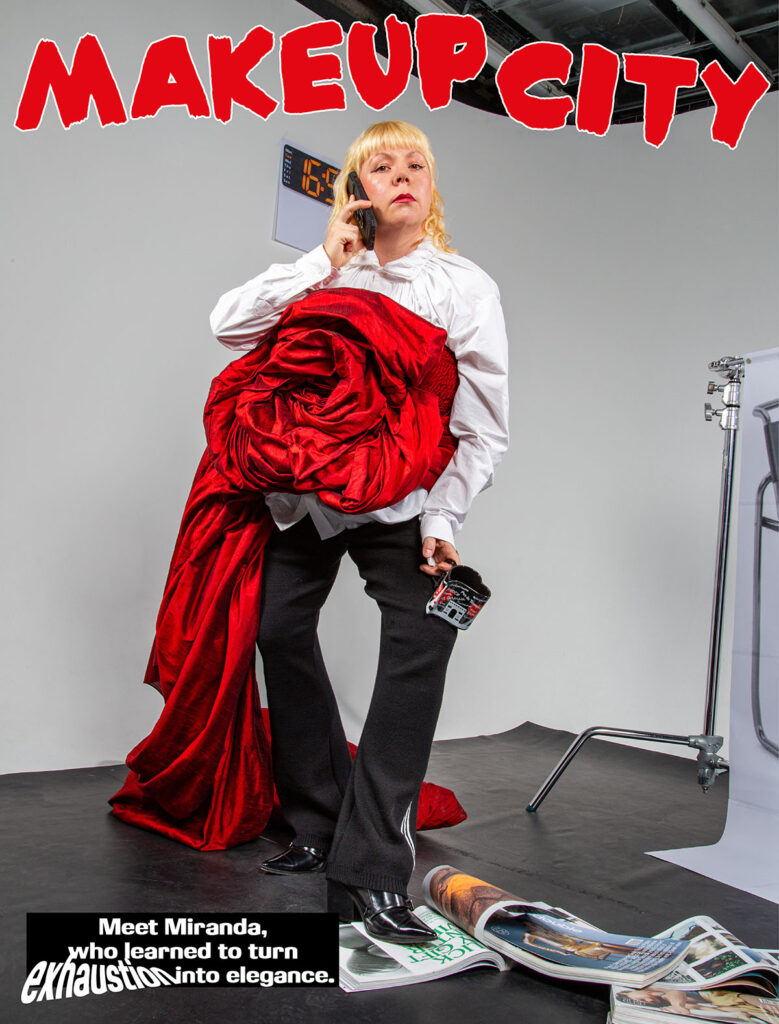
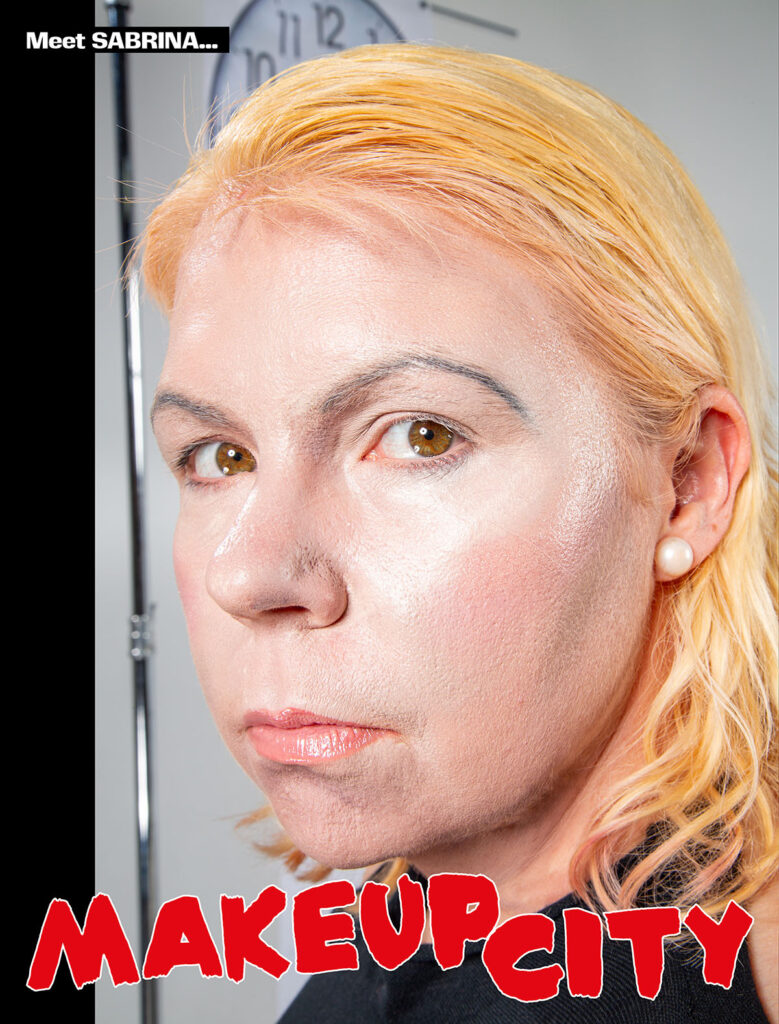
Working within collaborative structures such as HOLZINGERurbat, SÜSSHOLZ, and Femxphotographers.org, as well as on projects like Make-Up City together with fashion designer Alessandro Santi and photographer Dalmonia Rognean, has further reinforced this understanding. I enjoy collaborative work because it brings different ways of thinking and different experiences into a project and combines them into something new. This is why I tend to think of authorship less as something fixed or individual and more as something shared and shaped by different people, influences, and contexts. For me, the distinction between solo and collective work is therefore less important than the fact that collaboration is always already present in the process of image-making.
At the same time, I feel that me, as I think many others as well, are still shaped by the idea of the single creative genius and the need to assign authorship to one name. This creates tensions when moving between collaborative and individual contexts. Questions arise around influence, proximity, and how clearly individual contributions can be separated. I do not have fixed answers to these questions. Instead, I revisit them with each project and try to acknowledge and respect everyone involved. It is an ongoing negotiation that does not always prevent misunderstandings or hurt feelings, but I believe it becomes easier the more openly it is discussed.
Temple Magazine
Humour appears repeatedly in your practice as a critical tool rather than mere irony. Where does that impulse come from, and do you think it changes how the work is received, particularly when the subject matter is as charged as body politics or gender?
Claudia Holzinger
I think humour is a very powerful tool for opening up discussions around topics that people often tend to avoid because they create discomfort or insecurity.
In the best case, viewers initially approach my work with laughter. That reaction might shift then into something reflective, something like: “ah, okay, there it is again, the systemic mess we are constantly exposed to,” Where certain body types and gender expressions are presented as right, while others are excluded or made invisible. These norms are often reinforced through highly charged notions such as “the normal” or “the natural,” concepts that have long played a central role in fascist imaginaries of purity, order, and belonging.
It is difficult to unlearn what one has been surrounded by and exposed to from an early age, since the first encounter with screens, advertising, or fashion magazines. Within this context, humour can function as an entry point. A moment of laughter can create a sense of lightness that lowers resistance against touching emotionally charged topics and makes it easier to engage with this difficult content. In this way, humour is creating accessibility, while still holding space for critique and discomfort, and that’s why I like this approach so much.
Temple Magazine
Your training under Juergen Teller seems to have left traces, a certain directness, a refusal of aestheticization for its own sake. How conscious are you of that lineage, and how have you worked to define your own visual language against or through it?
Claudia Holzinger
I am very aware of this lineage, and I value it greatly.
What I think I took from studying with Juergen Teller is less a specific visual style (although I love flash too!) than a particular way of working. Rather than fully resolving an image before entering a shoot, I learned the importance of leaving certain elements open—making some decisions in advance while consciously allowing space for chance, circumstance, and the people involved to shape the outcome. For me, this openness is closely connected to a sense of playfulness in the photographic process, and to resisting the urge to over-determine an image from the beginning.
At the same time, there are fundamental differences between our practices. I am neither a man nor a public figure, and most of the people who appear in my images are not either. This inevitably shapes the gaze, as well as the dynamics of attention, authorship, projection, and representation. Because of this, I never felt a strong need to define myself in relation to Juergen through a deliberate act of separation. The distinction was already there, embedded in the different positions from which we work and the different relationships we have to our subjects.
So while I am grateful for what I learned from him and continue to carry aspects of that approach with me, my own visual language emerged through the particular experiences, relationships, and questions that shape my work.
Temple Magazine
You have described yourself as "a teller of new pictorial stories." What does a pictorial story need that a text-based one doesn't, and what can it never quite do?
Claudia Holzinger
I think of myself as someone who tells stories primarily through images rather than through text. My work often unfolds across sequences of photographs, where meaning emerges through the relationships between images, gestures, objects, costumes, and references, rather than through a linear narrative.
What pictorial storytelling can do particularly well is hold different meanings at once. An image can be humorous and unsettling, theatrical and vulnerable, personal and political simultaneously. It can create emotional and associative connections that are difficult to articulate in words.
At the same time, images operate differently from text. A text can guide interpretation with great precision, whereas images are often more open. Viewers inevitably bring their own experiences and associations into what they see, and that participation becomes part of the work itself.
I don't see this openness as a limitation. In fact, it is what attracts me to visual storytelling. While I try to avoid certain readings that would contradict the work, I also want to preserve a degree of ambiguity. We often expect things to communicate a single, clear meaning, but I am more interested in higlighting, that multiple truths exist at the same time.
Temple Magazine
Your practice combines photography, installation, and performative self-staging. How do these three disciplines inform each other, and is there one that always acts as the starting point?
Claudia Holzinger
I understand my practice as performance for camera.
The camera functions as the eyes of an audience, which means that photography is not documentation but the intended outcome from the beginning. So far, this set-up is almost always the starting point of my work.
Most of the time, though not exclusively, I do self-portraits.
I often use costumes, make-up, and props to embody characters or roles, and I usually discover how these figures exist in the body, through posture, gesture, and expression, during the act of photographing itself. Working with my own body allows me to explore this directly and find it out in the moment the photographs are being made. If I do not yet know how a role is embodied, how could I clearly translate it into words and instruct someone else to perform it? Because of this, it often feels more coherent to work with myself as both subject and material.
Installation enters the process when the images encounter a viewer outside the digital. I rarely believe in the idea of photographs as flat images in a frame on a wall. Instead, I am interested in giving them a physical presence of their own. The installational aspect emerges through the way the images occupy space, and relate to their surroundings. In this sense, performance for camera (= photography) and installation are not separate disciplines in my practice but different stages of the same process.
Temple Magazine
And the body is central to your work, but rather than simply documenting it, you construct it through costumes, body paint, and mise en scène. What does this process of fabrication allow you to say about the body that straightforward representation wouldn't?
Claudia Holzinger
I think the body holds a strong humorous potential that is most of the time completely overlooked, because it is usually treated with excessive seriousness and rigid expectations. Certain body parts are supposed to look a particular way, fat is only accepted in some areas and rejected in others, while in reality the body continuously produces different, unpredictable forms that become even less controllable as we age, give birth, experience illnesses.
Costumes and body paint allow me to exaggerate and extend these conditions rather than simply documenting them. By pushing into unexpected or absurd forms, I draw attention to how constructed our ideas of a normal or natural body actually are. Through this, I question norms, disgusts, and limitations that are projected onto bodies. Rather than presenting the body as a fixed or correct form, I am interested in showing it as something flexible, unstable, transforming and funny.
Temple Magazine
You work both as a solo artist and within several collaborative structures (HOLZINGERurbat, SÜSSHOLZ, Femxphotographers.org). How do you navigate between the individual and the collective, and does working with others alter the way you think about authorship?
Claudia Holzinger
I think of all my work as collaborative in some form, even in projects, where I develop a concept mostly by myself. My thinking is always shaped by previous and parallel projects, as well as by the broader cultural context I am part of, which means what I read, watch, all the ideas produced by others that touch me somehow. In that sense, I find it difficult to see authorship as purely individual. Also in my self-portrait practice, I am rarely completely alone. There is usually at least one person who triggers the shutter while I handle staging and lighting. What may appear as a solo process is therefore also a form of collaboration, which I acknowledge in the credits.
Working within collaborative structures such as HOLZINGERurbat, SÜSSHOLZ, and Femxphotographers.org, as well as on projects like Make-Up City together with fashion designer Alessandro Santi and photographer Dalmonia Rognean, has further reinforced this understanding. I enjoy collaborative work because it brings different ways of thinking and different experiences into a project and combines them into something new. This is why I tend to think of authorship less as something fixed or individual and more as something shared and shaped by different people, influences, and contexts. For me, the distinction between solo and collective work is therefore less important than the fact that collaboration is always already present in the process of image-making.
At the same time, I feel that me, as I think many others as well, are still shaped by the idea of the single creative genius and the need to assign authorship to one name. This creates tensions when moving between collaborative and individual contexts. Questions arise around influence, proximity, and how clearly individual contributions can be separated. I do not have fixed answers to these questions. Instead, I revisit them with each project and try to acknowledge and respect everyone involved. It is an ongoing negotiation that does not always prevent misunderstandings or hurt feelings, but I believe it becomes easier the more openly it is discussed.
Temple Magazine
Humour appears repeatedly in your practice as a critical tool rather than mere irony. Where does that impulse come from, and do you think it changes how the work is received, particularly when the subject matter is as charged as body politics or gender?
Claudia Holzinger
I think humour is a very powerful tool for opening up discussions around topics that people often tend to avoid because they create discomfort or insecurity.
In the best case, viewers initially approach my work with laughter. That reaction might shift then into something reflective, something like: “ah, okay, there it is again, the systemic mess we are constantly exposed to,” Where certain body types and gender expressions are presented as right, while others are excluded or made invisible. These norms are often reinforced through highly charged notions such as “the normal” or “the natural,” concepts that have long played a central role in fascist imaginaries of purity, order, and belonging.
It is difficult to unlearn what one has been surrounded by and exposed to from an early age, since the first encounter with screens, advertising, or fashion magazines. Within this context, humour can function as an entry point. A moment of laughter can create a sense of lightness that lowers resistance against touching emotionally charged topics and makes it easier to engage with this difficult content. In this way, humour is creating accessibility, while still holding space for critique and discomfort, and that’s why I like this approach so much.
Temple Magazine
Your training under Juergen Teller seems to have left traces, a certain directness, a refusal of aestheticization for its own sake. How conscious are you of that lineage, and how have you worked to define your own visual language against or through it?
Claudia Holzinger
I am very aware of this lineage, and I value it greatly.
What I think I took from studying with Juergen Teller is less a specific visual style (although I love flash too!) than a particular way of working. Rather than fully resolving an image before entering a shoot, I learned the importance of leaving certain elements open—making some decisions in advance while consciously allowing space for chance, circumstance, and the people involved to shape the outcome. For me, this openness is closely connected to a sense of playfulness in the photographic process, and to resisting the urge to over-determine an image from the beginning.
At the same time, there are fundamental differences between our practices. I am neither a man nor a public figure, and most of the people who appear in my images are not either. This inevitably shapes the gaze, as well as the dynamics of attention, authorship, projection, and representation. Because of this, I never felt a strong need to define myself in relation to Juergen through a deliberate act of separation. The distinction was already there, embedded in the different positions from which we work and the different relationships we have to our subjects.
So while I am grateful for what I learned from him and continue to carry aspects of that approach with me, my own visual language emerged through the particular experiences, relationships, and questions that shape my work.
Temple Magazine
You have described yourself as "a teller of new pictorial stories." What does a pictorial story need that a text-based one doesn't, and what can it never quite do?
Claudia Holzinger
I think of myself as someone who tells stories primarily through images rather than through text. My work often unfolds across sequences of photographs, where meaning emerges through the relationships between images, gestures, objects, costumes, and references, rather than through a linear narrative.
What pictorial storytelling can do particularly well is hold different meanings at once. An image can be humorous and unsettling, theatrical and vulnerable, personal and political simultaneously. It can create emotional and associative connections that are difficult to articulate in words.
At the same time, images operate differently from text. A text can guide interpretation with great precision, whereas images are often more open. Viewers inevitably bring their own experiences and associations into what they see, and that participation becomes part of the work itself.
I don't see this openness as a limitation. In fact, it is what attracts me to visual storytelling. While I try to avoid certain readings that would contradict the work, I also want to preserve a degree of ambiguity. We often expect things to communicate a single, clear meaning, but I am more interested in higlighting, that multiple truths exist at the same time.