Alex Sinh Nguyen
April 2026
Alex Sinh Nguyen’s work moves between industrial design, digital environments, and video game culture. Through objects and interventions inside existing games, he explores how digital worlds influence the way we imagine and construct objects today.
Temple Magazine
Your work often navigates between industrial design and digital environments. Could you tell us how this approach emerged in your practice and what initially drew you to working with digital objects?
Alex Sinh Nguyen
When I finished my studies, I quickly began working as an independent designer. I was already receiving a few commissions and showing work connected to my graduation project, which had gained some attention partly because very few students in industrial design were proposing digital projects at the time.
That project also brought together the two directions I had been exploring during my studies. On one side, there were the school projects focused on physical objects and traditional industrial design. At the same time, I was experimenting a lot with digital tools on my own, building part of my practice as a self-taught designer. For me these two worlds were always connected, even if it was difficult to articulate at the time.
In the design context I was in, digital practices were still treated cautiously. Design was expected to be material, something tangible. Digital tools were mainly used to represent objects through renders or packshots, but rarely considered as the final outcome. What interested me instead was the idea that the digital object itself could exist as the final form.
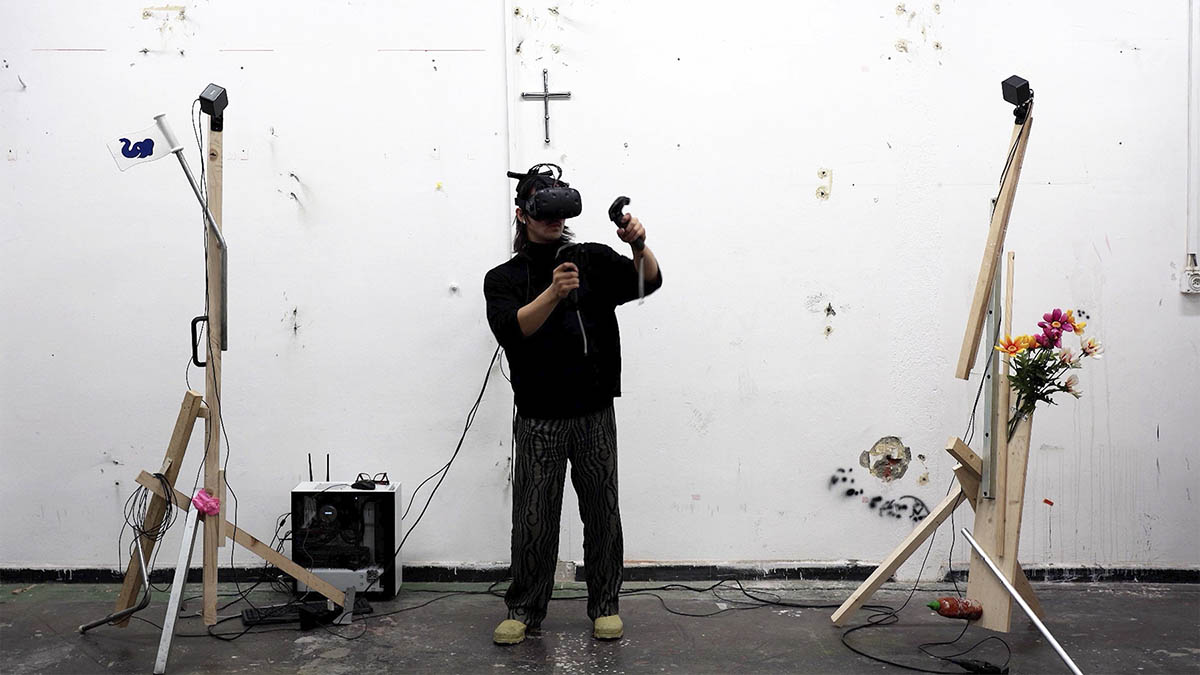
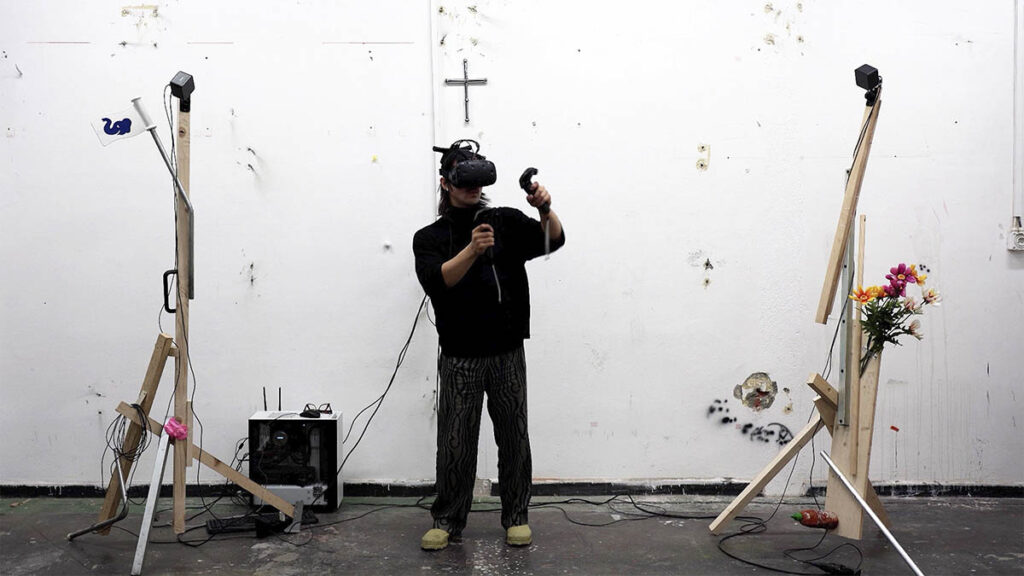
For my graduation project, I developed a VR game in which users could construct objects through assemblage. The idea was less about producing a finished object than about creating a system. I was interested in the notion of the “non-object,” where the user completes the form themselves. In that sense, the project avoided the traditional expectation of presenting a single final design object.
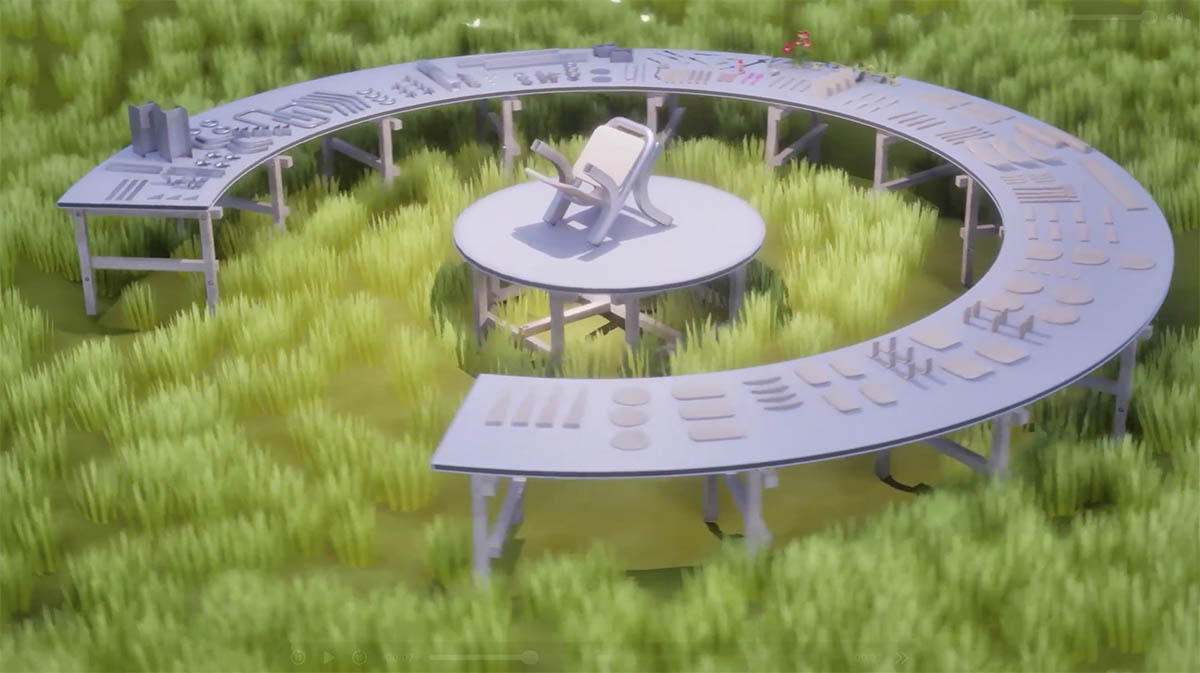
Technically, there wasn’t really an object to exhibit. The project was essentially code. I worked with a developer to build a system that recreated, digitally, the logic of a model-making workshop. You could import any digital object, whether found online or modeled yourself, simply by dragging and dropping it into the game. Once inside the environment, each element had weight, physics, and collision.
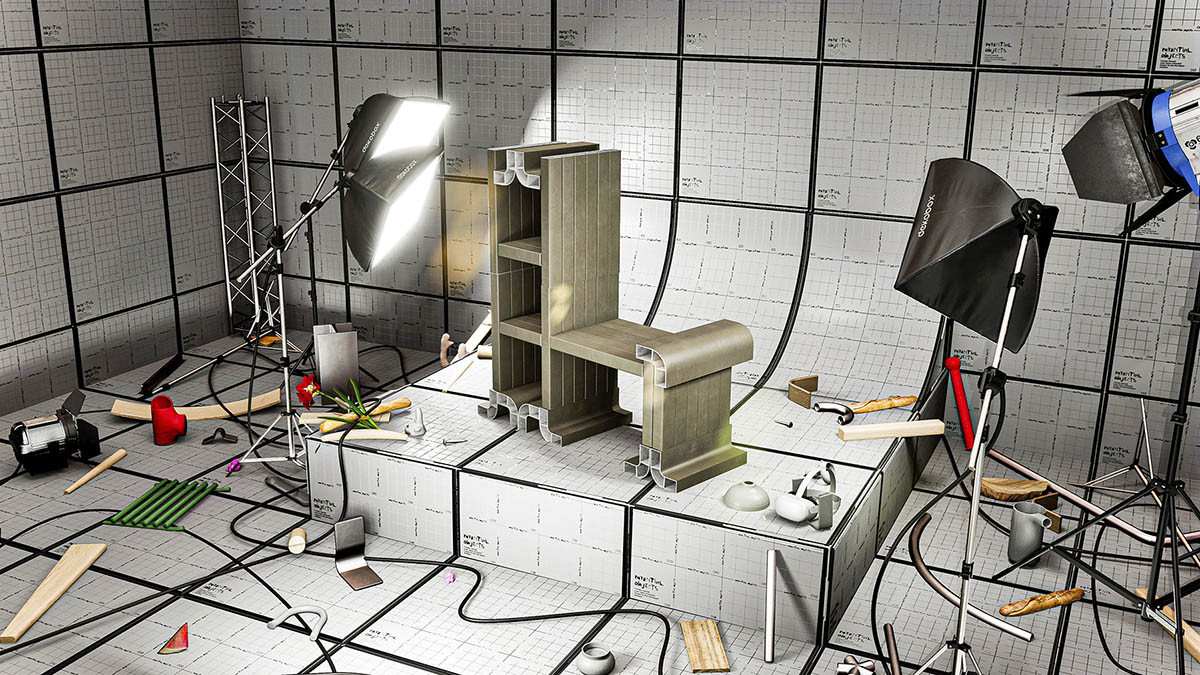
The only action I programmed allowed users to fuse objects together. When two pieces came close, you could press the controller trigger and create something like an electric arc, almost like welding, joining the elements. From there I generated a small series of forms using very simple libraries, basic fragments such as pieces of wood or simple shapes that could be assembled freely within the system.
Temple Magazine
You described that early project as both a game and a tool. How did that dual idea work?
Alex Sinh Nguyen
I saw it as something that could function on two levels. On one hand, it could simply be used as a game. People who enjoy sandbox environments, like Minecraft, can just spend time building things freely, making houses or strange objects for the pleasure of it. But at the same time, a designer could approach it more seriously, almost as a prototyping tool. If you wanted to test an idea for an object, you could quickly assemble different elements and produce variations without the usual constraints. That freedom was really central to the project.
Temple Magazine
Narrative seems to play an important role in your work. Where does that interest come from?
Alex Sinh Nguyen
The interest in video games actually came a bit later in my work, even though they were always present in my life. I grew up with them and they shaped my imagination a lot. At some point I started a personal project that was almost a reaction to the design world.
At the time, digital culture and especially video games weren’t taken very seriously in design circles. I found that interesting, because design itself has produced so many books cataloguing objects: chairs, lamps, tables, endlessly categorized and documented.
So I started doing something similar with objects found in video games. Many games create worlds that mirror the environments we know, whether medieval settings, futuristic cities, or something very close to reality like early GTA games.
I began taking screenshots of objects I encountered in these games and building a kind of personal archive. What fascinated me was that these objects often resemble real ones but are subtly different, because they were modeled by developers rather than by designers.
For example, you might find something that clearly references a classic bistro chair in a Parisian café, but the proportions or details are slightly off. That distortion interested me a lot.
In design we often say that our visual culture shapes the objects we produce. So I started wondering: if I spend a lot of time in video game environments, could my design culture also be shaped by those objects? Even if they’re imperfect or slightly strange.
Temple Magazine
Almost like designers reinventing design objects without necessarily belonging to that culture themselves.
Alex Sinh Nguyen
Yes, exactly. And I also like to keep a certain degree of mystery or ambiguity in my work. I actually enjoy projects that are not immediately understandable. When I encounter an artwork that I don’t fully grasp, I find it stimulating, because it leaves space for interpretation.
Video games offer a very interesting way to play with that ambiguity. Sometimes I introduce an object I designed, or one made by a friend, directly into a game environment. It creates a kind of fracture between the real and the virtual world.
What I find interesting is that it forces me to engage deeply with the narrative of the game itself. I often need to explore the game to find a moment, a sequence, or a hidden element that allows the object to appear in a meaningful way.
Temple Magazine
Was that the moment when you really started shifting toward working with video games in a more explicit way?
Alex Sinh Nguyen
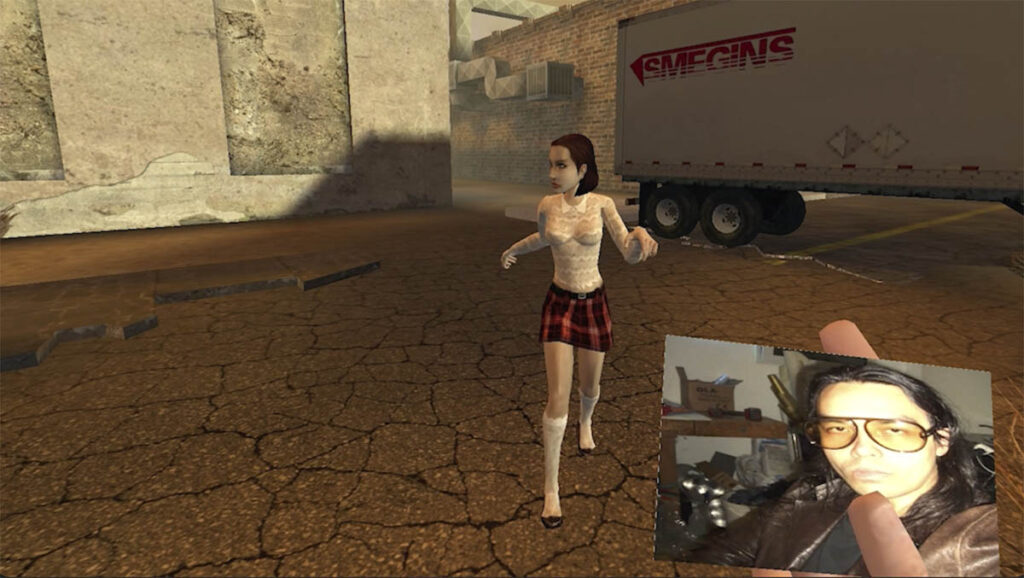
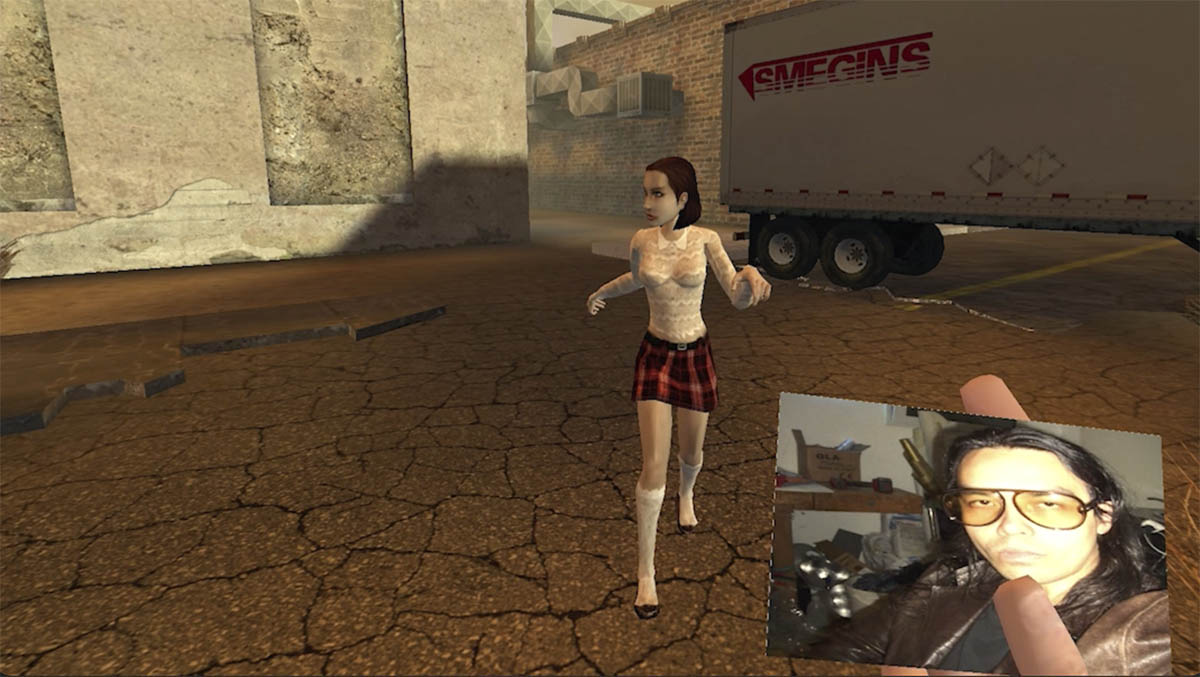
Yes, that’s really when things started to shift. The first project I did in that direction was with the game Bully, a Rockstar title that I had rediscovered. It’s a very satirical game where you play a teenager in a troubled boarding school and have to find your place within that environment. The game itself had been quite controversial when it came out, which I found interesting.
At the time it also resonated well with the brand I was working with. There was a rebellious edge that matched the image they were cultivating. What fascinated me most about integrating their clothing directly into the game was accessing the code, understanding how the system worked, identifying clothing elements and shapes close to the ones I wanted to modify, and inserting my own images. This created a form of dissonance: the clothes diverged without breaking the game’s immersion.
Temple Magazine
So it wasn’t just a 3D reconstruction of the game world.
Alex Sinh Nguyen
That was the point, it wasn’t a simulation or a modeled environment. It was the actual game. I had to work inside its code, which puts the project in a slightly ambiguous space, sometimes even at the edge of legality. But that tension was also part of what made it interesting.
Temple Magazine
At that time were you already working mainly on these kinds of projects?
Alex Sinh Nguyen
Not really. Before that, I was doing a lot of more traditional design work. I also produced a lot of 3D animations and renderings for brands, architects, or other designers. It was a way to make a living alongside residencies and open calls.
But after a while I grew tired of the very controlled nature of that kind of 3D work. Everything was perfectly placed, perfectly lit, perfectly composed. In a way it’s a bit ironic, because I actually love building digital environments. There’s something almost like a “god game” feeling in being able to construct an entire world from scratch.
But at some point I wanted to escape that level of control. When I started experimenting with these strange forms of modding inside existing games, I discovered something that felt much more alive and organic.
The final result wasn’t a polished render anymore. It was simply me playing the game, performing a sequence, and recording my screen. The image quality wasn’t even particularly high. But I loved the idea that this could be the final form of the project.
Temple Magazine
So your work often uses video games as a framework. How did that approach develop?
Alex Sinh Nguyen
At some point I began experimenting with inserting objects or fashion pieces directly into existing video games. What interested me was less producing a polished image than entering the system of the game itself. Instead of recreating environments in 3D, I would intervene inside the game and record sequences while playing. The result became closer to a performance happening within the game world than to a traditional render.
After working for a long time with conventional 3D animation, where everything is perfectly controlled, I was looking for something more unpredictable. Inside a game you have to deal with a structure that already exists, with rules that were written by someone else. That creates something much more organic.
Technically it involves a lot of hacking and reverse engineering. The information you need is rarely available in one place, so you end up searching through obscure forums where enthusiasts share techniques for modifying games. In a way they function almost like digital craftsmen, people who know the internal mechanics of these systems extremely well.
From there it becomes a process of experimentation. You often have to trick the game engine by replacing one element with another or modifying existing assets so the system accepts them. Instead of building a clean 3D scene, you are navigating inside someone else’s structure and slowly understanding how that world was programmed.
Temple Magazine
You’ve also inserted objects into large open-world games. What interests you about working inside those environments?
Alex Sinh Nguyen
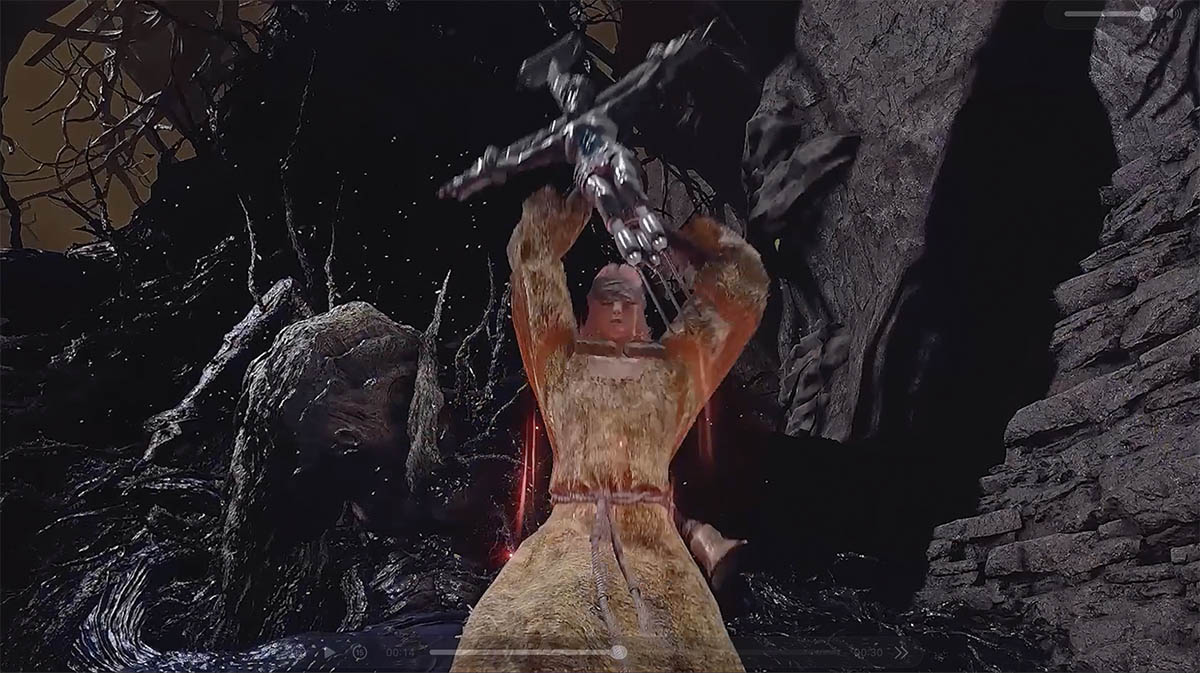
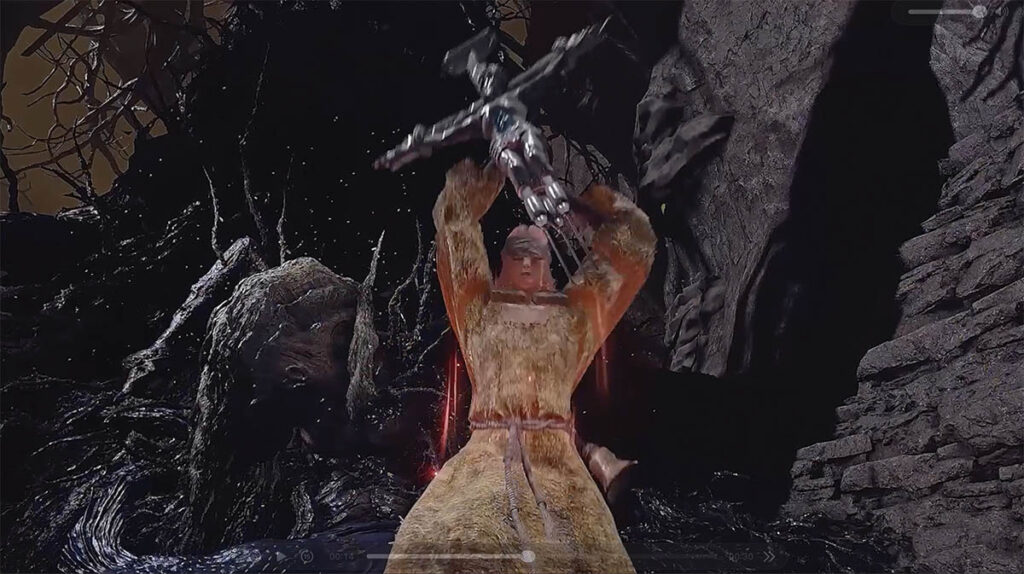
For example, I once inserted a ring into Elden Ring. It’s a very well-known open-world game with a medieval, fantasy atmosphere. While playing, I noticed that there was a specific item in the game that could only appear once, which made the sequence interesting from a narrative point of view. What I usually try to do is identify those moments or mechanics in the game that can create a meaningful scene.
Today I actually play much less than I did when I was younger. I don’t really have the time anymore. When I do play, it’s often more like research. I install several games that interest me for their narrative, their cultural impact, or sometimes because I remember them from when I was younger. I explore them quickly, note what seems interesting, and move on.
Over time my computer has become a kind of archive. It’s a bit chaotic, but it contains a large collection of game files, mods, screenshots, and fragments of experiments. In the end, all that complexity often results in something very simple: a short video file, sometimes not even in high definition.
Temple Magazine
How do you maintain a coherent practice between personal explorations like these and more traditional design projects?
Alex Sinh Nguyen
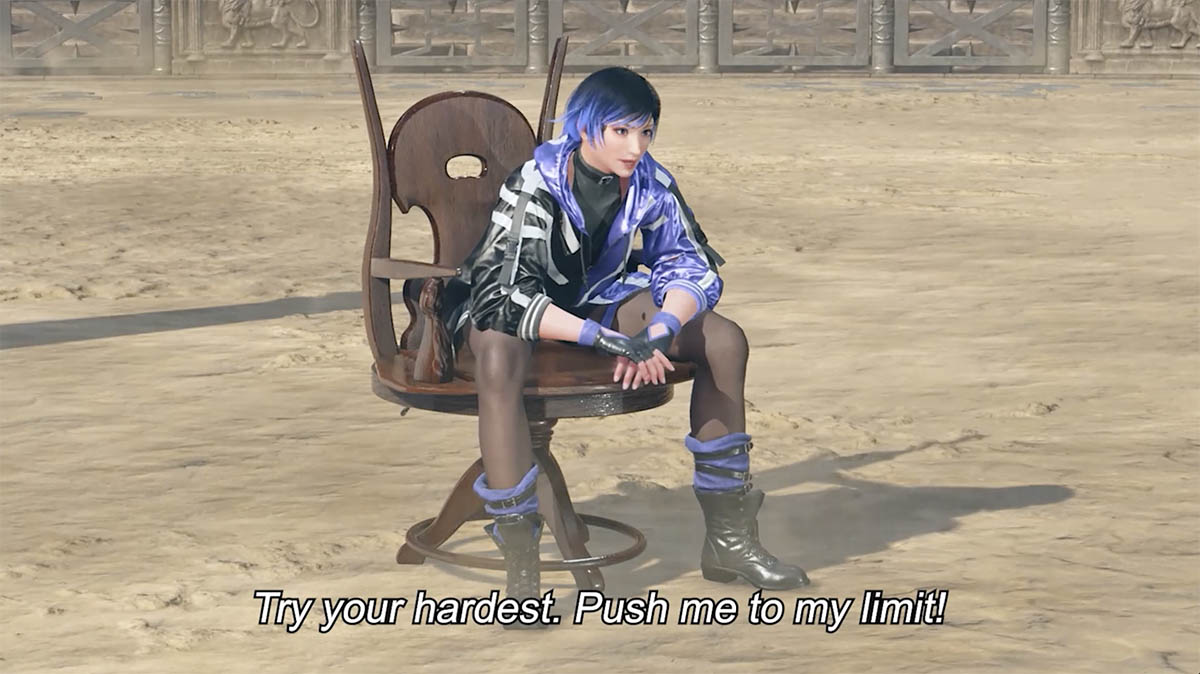
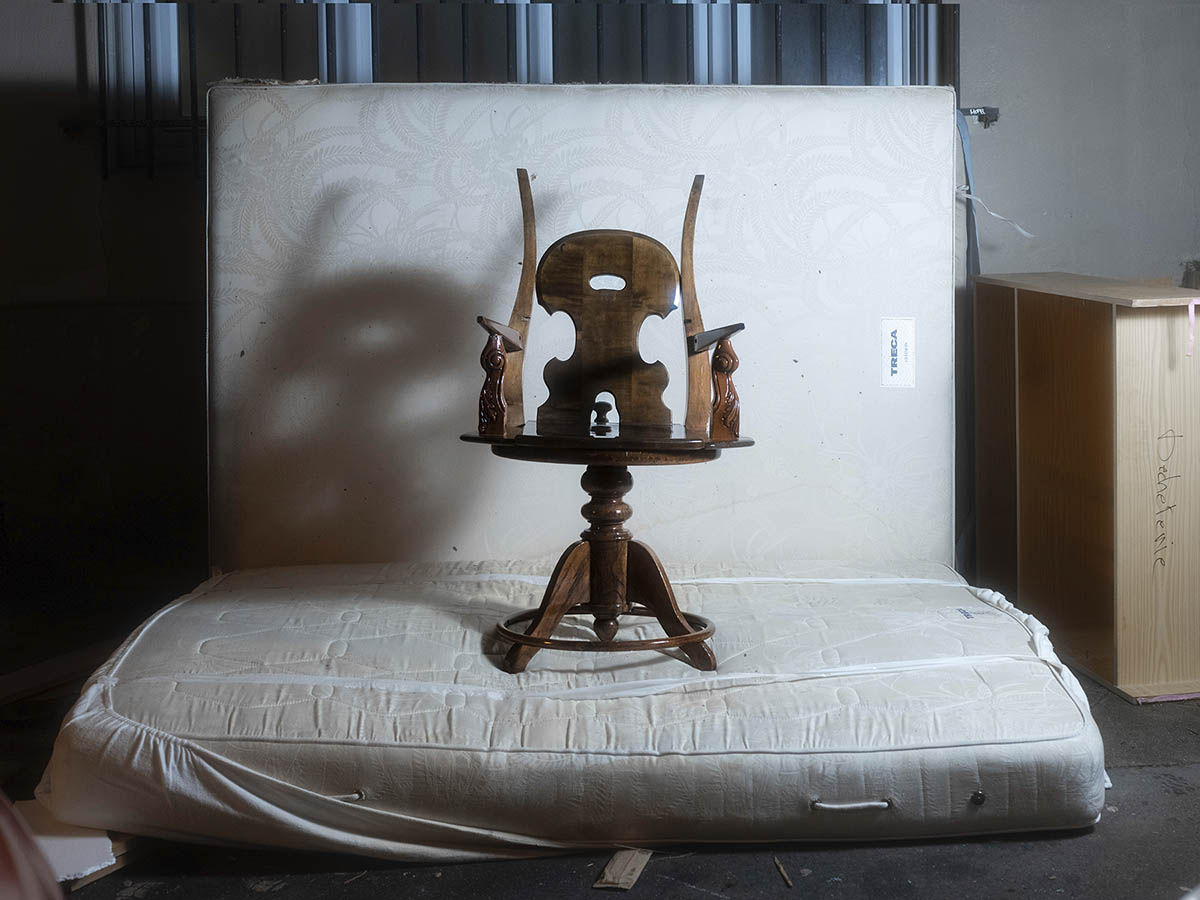
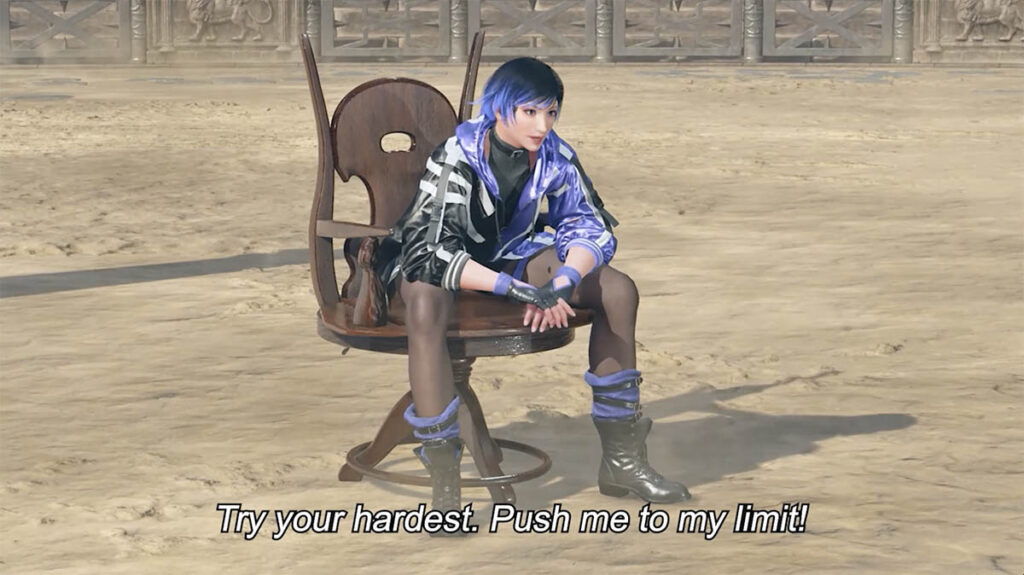
To be honest, I don’t have a strict method. I improvise a lot and try to follow what interests me at a given moment. Of course I take on commissions and design projects, but many ideas stay with me for a long time before they become something concrete. Often the narrative appears afterward. For instance, when we produced a series of wooden chairs, the connection with a fighting game came later. While playing, I noticed a victory animation where the character sits down after winning a fight, and it suddenly created the perfect moment to insert the chair into the scene. The idea came from that coincidence rather than from a predefined concept.
More recently my focus has started to shift again. After spending so much time modifying existing games, I became increasingly interested in understanding how those systems are built. When you open the files of a game and study its mechanics, you begin to understand the logic behind it.
Because of that, I’m now working on developing my own game. In a way it brings me back to ideas I explored earlier in my practice, but from the opposite direction. Instead of hacking existing systems, I’m trying to build the mechanics myself. At the same time, I continue to work on design projects alongside it. For now the game is still in development, but it’s a direction I’m very excited to explore.
Temple Magazine
Your work often navigates between industrial design and digital environments. Could you tell us how this approach emerged in your practice and what initially drew you to working with digital objects?
Alex Sinh Nguyen
When I finished my studies, I quickly began working as an independent designer. I was already receiving a few commissions and showing work connected to my graduation project, which had gained some attention partly because very few students in industrial design were proposing digital projects at the time.
That project also brought together the two directions I had been exploring during my studies. On one side, there were the school projects focused on physical objects and traditional industrial design. At the same time, I was experimenting a lot with digital tools on my own, building part of my practice as a self-taught designer. For me these two worlds were always connected, even if it was difficult to articulate at the time.
In the design context I was in, digital practices were still treated cautiously. Design was expected to be material, something tangible. Digital tools were mainly used to represent objects through renders or packshots, but rarely considered as the final outcome. What interested me instead was the idea that the digital object itself could exist as the final form.
For my graduation project, I developed a VR game in which users could construct objects through assemblage. The idea was less about producing a finished object than about creating a system. I was interested in the notion of the “non-object,” where the user completes the form themselves. In that sense, the project avoided the traditional expectation of presenting a single final design object.
Technically, there wasn’t really an object to exhibit. The project was essentially code. I worked with a developer to build a system that recreated, digitally, the logic of a model-making workshop. You could import any digital object, whether found online or modeled yourself, simply by dragging and dropping it into the game. Once inside the environment, each element had weight, physics, and collision.
The only action I programmed allowed users to fuse objects together. When two pieces came close, you could press the controller trigger and create something like an electric arc, almost like welding, joining the elements. From there I generated a small series of forms using very simple libraries, basic fragments such as pieces of wood or simple shapes that could be assembled freely within the system.

Temple Magazine
You described that early project as both a game and a tool. How did that dual idea work?
Alex Sinh Nguyen
I saw it as something that could function on two levels. On one hand, it could simply be used as a game. People who enjoy sandbox environments, like Minecraft, can just spend time building things freely, making houses or strange objects for the pleasure of it. But at the same time, a designer could approach it more seriously, almost as a prototyping tool. If you wanted to test an idea for an object, you could quickly assemble different elements and produce variations without the usual constraints. That freedom was really central to the project.
Temple Magazine
Narrative seems to play an important role in your work. Where does that interest come from?
Alex Sinh Nguyen
The interest in video games actually came a bit later in my work, even though they were always present in my life. I grew up with them and they shaped my imagination a lot. At some point I started a personal project that was almost a reaction to the design world.
At the time, digital culture and especially video games weren’t taken very seriously in design circles. I found that interesting, because design itself has produced so many books cataloguing objects: chairs, lamps, tables, endlessly categorized and documented.
So I started doing something similar with objects found in video games. Many games create worlds that mirror the environments we know, whether medieval settings, futuristic cities, or something very close to reality like early GTA games.
I began taking screenshots of objects I encountered in these games and building a kind of personal archive. What fascinated me was that these objects often resemble real ones but are subtly different, because they were modeled by developers rather than by designers.
For example, you might find something that clearly references a classic bistro chair in a Parisian café, but the proportions or details are slightly off. That distortion interested me a lot.
In design we often say that our visual culture shapes the objects we produce. So I started wondering: if I spend a lot of time in video game environments, could my design culture also be shaped by those objects? Even if they’re imperfect or slightly strange.
Temple Magazine
Almost like designers reinventing design objects without necessarily belonging to that culture themselves.
Alex Sinh Nguyen
Yes, exactly. And I also like to keep a certain degree of mystery or ambiguity in my work. I actually enjoy projects that are not immediately understandable. When I encounter an artwork that I don’t fully grasp, I find it stimulating, because it leaves space for interpretation.
Video games offer a very interesting way to play with that ambiguity. Sometimes I introduce an object I designed, or one made by a friend, directly into a game environment. It creates a kind of fracture between the real and the virtual world.
What I find interesting is that it forces me to engage deeply with the narrative of the game itself. I often need to explore the game to find a moment, a sequence, or a hidden element that allows the object to appear in a meaningful way.

Temple Magazine
Was that the moment when you really started shifting toward working with video games in a more explicit way?
Alex Sinh Nguyen
Yes, that’s really when things started to shift. The first project I did in that direction was with the game Bully, a Rockstar title that I had rediscovered. It’s a very satirical game where you play a teenager in a troubled boarding school and have to find your place within that environment. The game itself had been quite controversial when it came out, which I found interesting.
At the time it also resonated well with the brand I was working with. There was a rebellious edge that matched the image they were cultivating. What fascinated me most about integrating their clothing directly into the game was accessing the code, understanding how the system worked, identifying clothing elements and shapes close to the ones I wanted to modify, and inserting my own images. This created a form of dissonance: the clothes diverged without breaking the game’s immersion.
Temple Magazine
So it wasn’t just a 3D reconstruction of the game world.
Alex Sinh Nguyen
That was the point, it wasn’t a simulation or a modeled environment. It was the actual game. I had to work inside its code, which puts the project in a slightly ambiguous space, sometimes even at the edge of legality. But that tension was also part of what made it interesting.
Temple Magazine
At that time were you already working mainly on these kinds of projects?
Alex Sinh Nguyen
Not really. Before that, I was doing a lot of more traditional design work. I also produced a lot of 3D animations and renderings for brands, architects, or other designers. It was a way to make a living alongside residencies and open calls.
But after a while I grew tired of the very controlled nature of that kind of 3D work. Everything was perfectly placed, perfectly lit, perfectly composed. In a way it’s a bit ironic, because I actually love building digital environments. There’s something almost like a “god game” feeling in being able to construct an entire world from scratch.
But at some point I wanted to escape that level of control. When I started experimenting with these strange forms of modding inside existing games, I discovered something that felt much more alive and organic.
The final result wasn’t a polished render anymore. It was simply me playing the game, performing a sequence, and recording my screen. The image quality wasn’t even particularly high. But I loved the idea that this could be the final form of the project.
Temple Magazine
So your work often uses video games as a framework. How did that approach develop?
Alex Sinh Nguyen
At some point I began experimenting with inserting objects or fashion pieces directly into existing video games. What interested me was less producing a polished image than entering the system of the game itself. Instead of recreating environments in 3D, I would intervene inside the game and record sequences while playing. The result became closer to a performance happening within the game world than to a traditional render.
After working for a long time with conventional 3D animation, where everything is perfectly controlled, I was looking for something more unpredictable. Inside a game you have to deal with a structure that already exists, with rules that were written by someone else. That creates something much more organic.
Technically it involves a lot of hacking and reverse engineering. The information you need is rarely available in one place, so you end up searching through obscure forums where enthusiasts share techniques for modifying games. In a way they function almost like digital craftsmen, people who know the internal mechanics of these systems extremely well.
From there it becomes a process of experimentation. You often have to trick the game engine by replacing one element with another or modifying existing assets so the system accepts them. Instead of building a clean 3D scene, you are navigating inside someone else’s structure and slowly understanding how that world was programmed.
Temple Magazine
You’ve also inserted objects into large open-world games. What interests you about working inside those environments?
Alex Sinh Nguyen
For example, I once inserted a ring into Elden Ring. It’s a very well-known open-world game with a medieval, fantasy atmosphere. While playing, I noticed that there was a specific item in the game that could only appear once, which made the sequence interesting from a narrative point of view. What I usually try to do is identify those moments or mechanics in the game that can create a meaningful scene.
Today I actually play much less than I did when I was younger. I don’t really have the time anymore. When I do play, it’s often more like research. I install several games that interest me for their narrative, their cultural impact, or sometimes because I remember them from when I was younger. I explore them quickly, note what seems interesting, and move on.
Over time my computer has become a kind of archive. It’s a bit chaotic, but it contains a large collection of game files, mods, screenshots, and fragments of experiments. In the end, all that complexity often results in something very simple: a short video file, sometimes not even in high definition.

Temple Magazine
How do you maintain a coherent practice between personal explorations like these and more traditional design projects?
Alex Sinh Nguyen
To be honest, I don’t have a strict method. I improvise a lot and try to follow what interests me at a given moment. Of course I take on commissions and design projects, but many ideas stay with me for a long time before they become something concrete. Often the narrative appears afterward. For instance, when we produced a series of wooden chairs, the connection with a fighting game came later. While playing, I noticed a victory animation where the character sits down after winning a fight, and it suddenly created the perfect moment to insert the chair into the scene. The idea came from that coincidence rather than from a predefined concept.
More recently my focus has started to shift again. After spending so much time modifying existing games, I became increasingly interested in understanding how those systems are built. When you open the files of a game and study its mechanics, you begin to understand the logic behind it.
Because of that, I’m now working on developing my own game. In a way it brings me back to ideas I explored earlier in my practice, but from the opposite direction. Instead of hacking existing systems, I’m trying to build the mechanics myself. At the same time, I continue to work on design projects alongside it. For now the game is still in development, but it’s a direction I’m very excited to explore.