

Bonded
May 2026
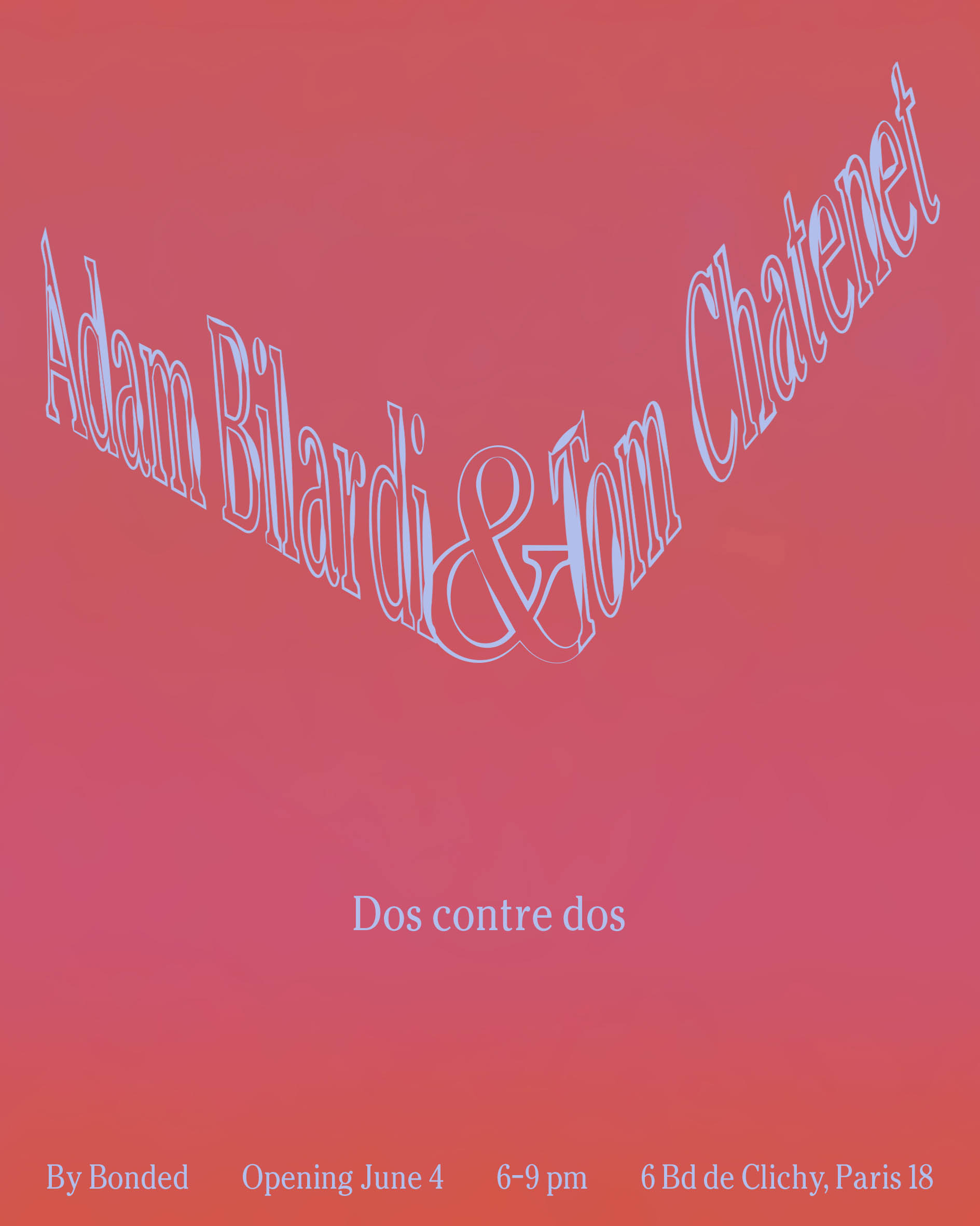
Dos contre Dos inaugurates BONDED, an ongoing series of duo exhibitions initiated by Mathilde Matteucci that celebrates intimate bonds between artists. Born out of a long friendship, this first edition brings together painters Adam Bilardi and Tom Chatenet, whose distinct pictorial practices meet for the first time in a shared space. The exhibition text is written by Margaux Bonopera, Head of Exhibitions at the Fondation Vincent van Gogh in Arles.
Opening: Thursday June 4, 2026, 6 to 9pm
6, Boulevard de Clichy, 75018 Paris
June 4 to 19, 2026
Temple Magazine
How did this all come together? Mathilde, what made you want to launch a curatorial project, and how did the idea of working with artists in a duo format come to you?
Mathilde Matteucci
What felt natural was to begin with people from my close circle, artists I love, admire, and with whom I share a certain vision. I had known Adam for a long time and was always frustrated not to see his work exhibited more often. Meeting Tom through him made everything click. Their practices are very different, but there’s something really beautiful in the relationship between them, both artistically and personally, and the show emerged from that connection.
I come from fashion now, but I actually started working in art centers, notably at Villa Noailles, before moving into fashion and image and communication at Coperni. It’s a very caring and generous environment that inspires the way I work, through trust, openness, and collaboration, and I want to extend that energy into other spaces.
Over time, I realized I already had a circle of people whose work and energy I genuinely believe in, and I wanted to build from that. BONDED is really about the bond between people, it’s also my way of living and thinking. Letting relationships guide the curation, rather than starting from a fixed concept.
Temple Magazine
And how does that translate in the show itself? How do you tell the story of a bond that isn't immediately visible?
Mathilde Matteucci
Some works respond to each other in striking ways, through echoes of form, color, or more intuitive logics.
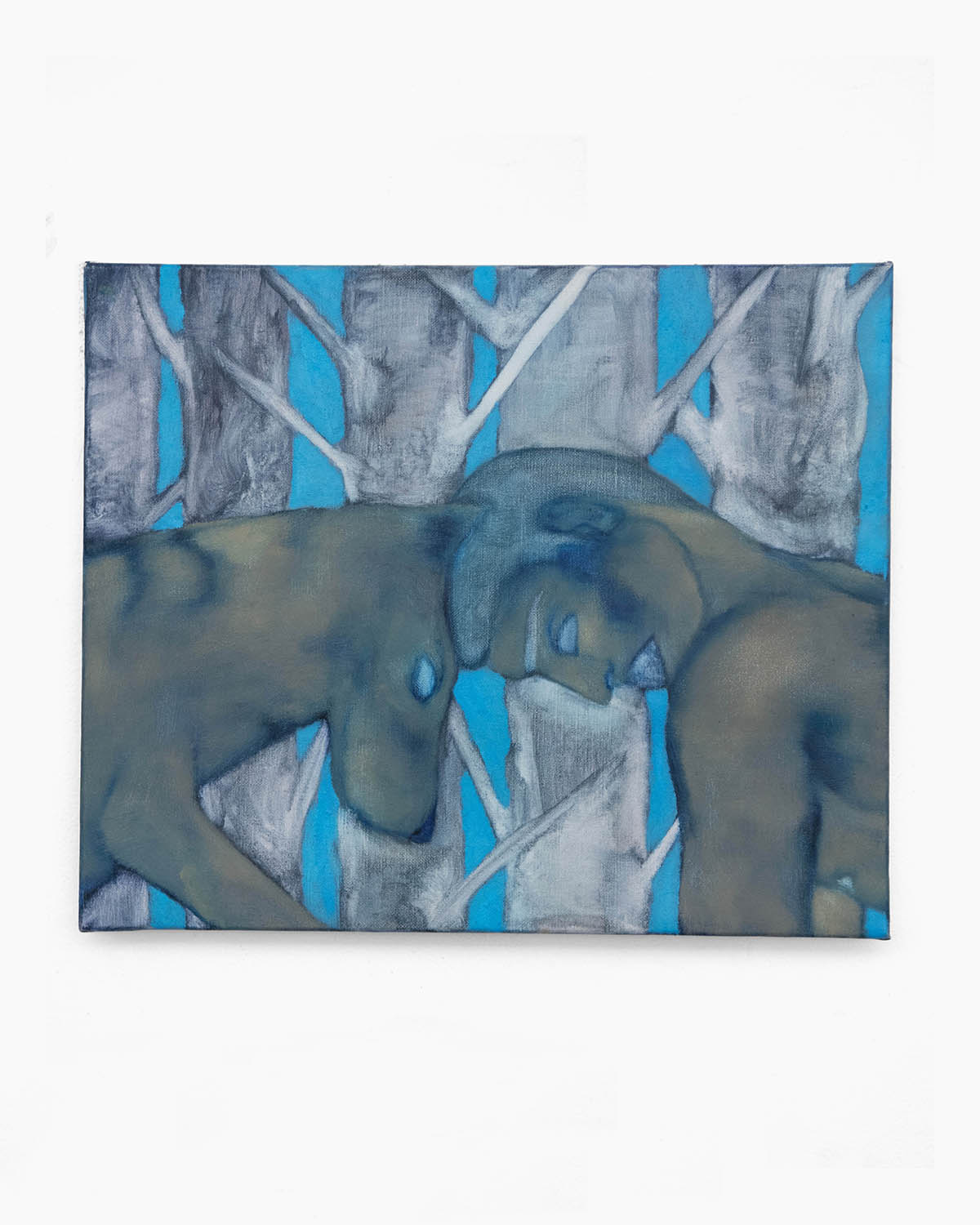
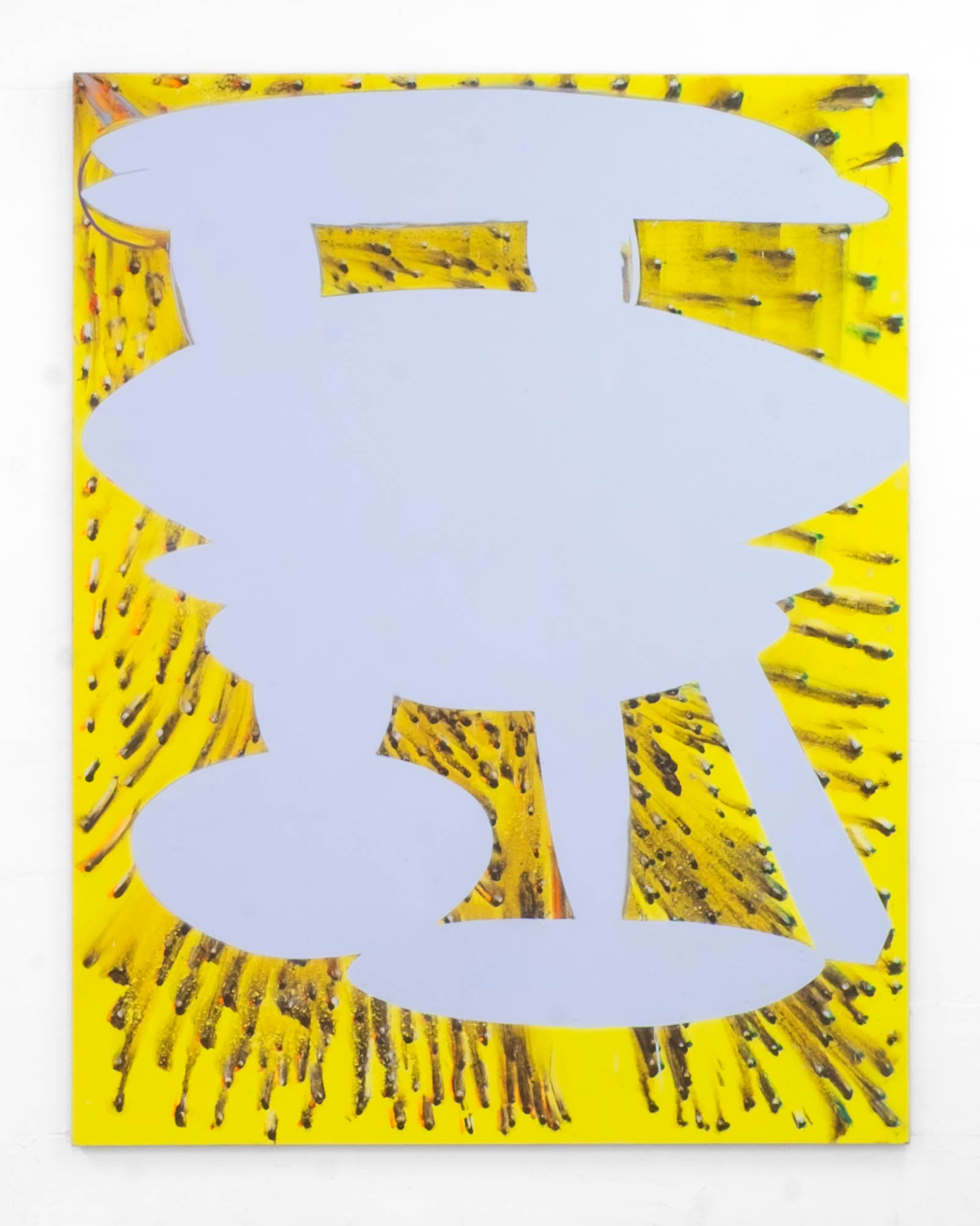
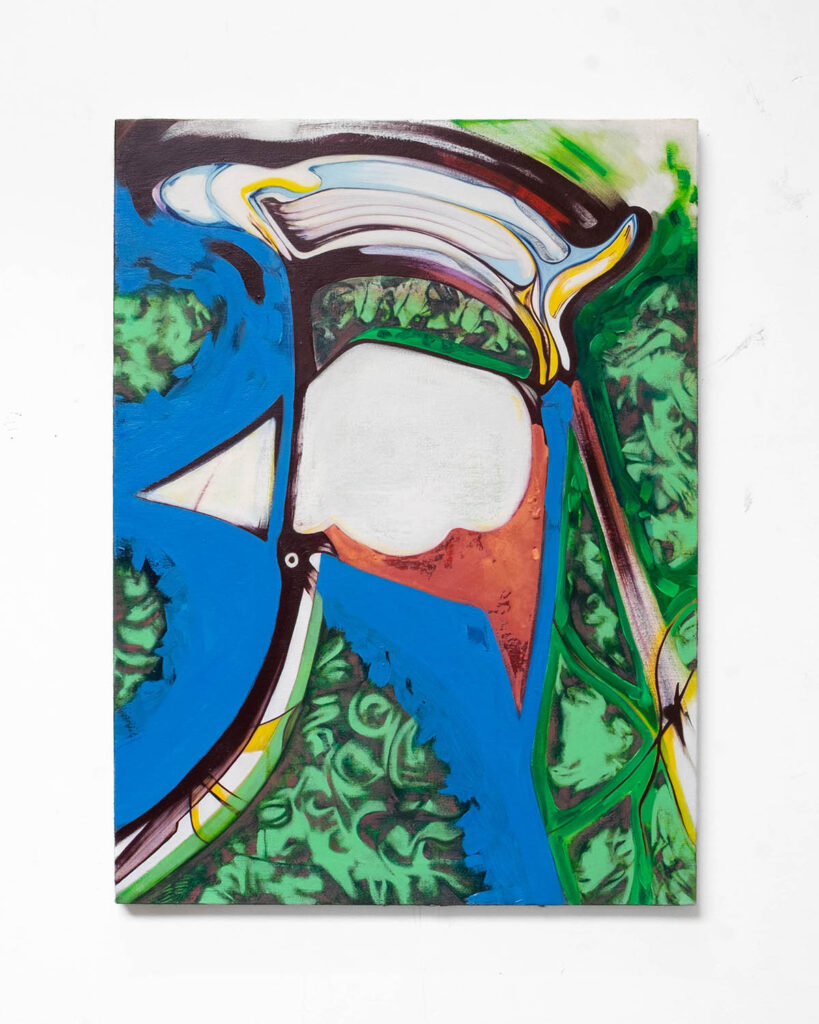
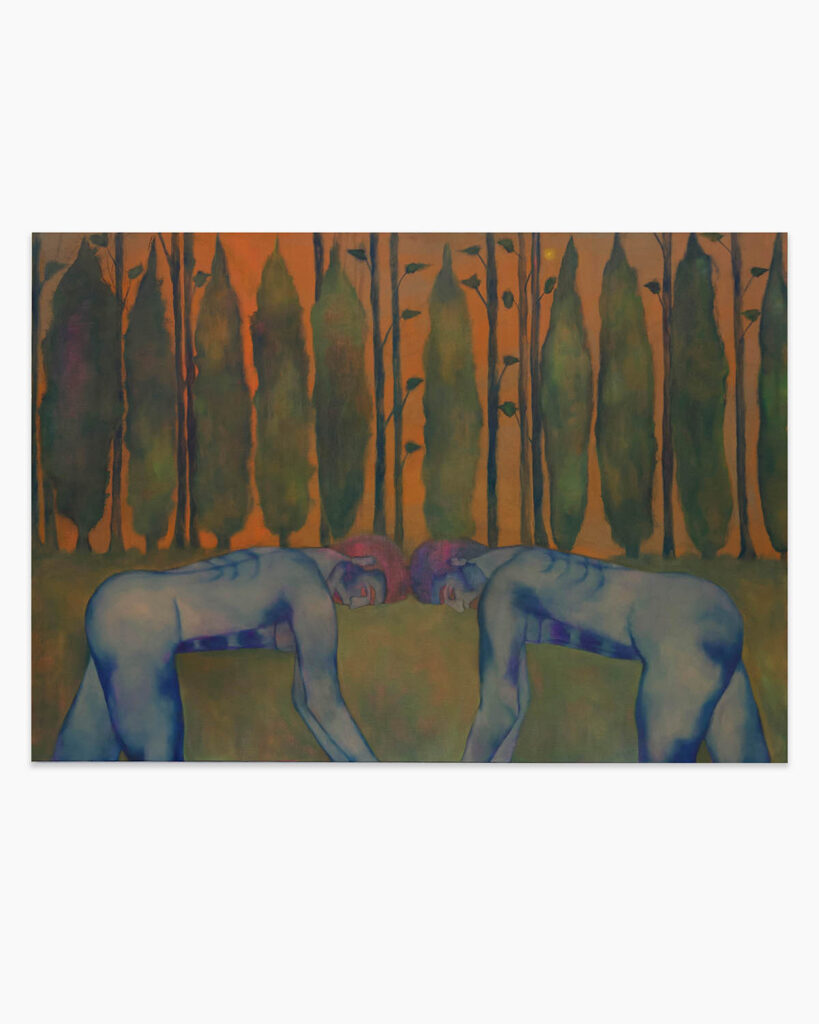
Tom’s series of chairs, presented for this exhibition, unexpectedly brings out the body, in dialogue with Adam’s figures, which lean against each other, face one another, and exist in a state of tension. Forms shift across registers: a chair can almost become an anthropomorphic presence, like wolf-like jaws facing Adam’s dogs. Everything feels deeply physical, rooted in contact and touch. We titled the exhibition Dos Contre Dos, for mutual support but also for the idea of the “back”, what turns and responds. And of course, friends don’t always agree on everything, so we don’t show everything together.
Tom Chatenet
I find that very moving. The title of the exhibition “Dos contre Dos” higlights the posture of the bodies painted by Adam and the positions suggested by my chairs in my paintings. The figures in Adam’s paintings are seated, kneeling, or on all fours. A chair shapes the body — it puts you in a certain position, even a certain mood. In that way, it becomes the imprint of a body in space. The encounter between our paintings is as much about balance as it is about confrontation.
Temple Magazine
And the works, was this something you already had, or did your paintings find each other by chance?
Adam Bilardi
Completely by chance. Tom and I started painting together around 2015, the year we met. We went to different schools but always kept communicating, he was in Lyon, I was in Cergy, then he left for Belgium. Despite the distance, we kept sending each other pictures of work in progress, our crises, our doubts and our stars. Painting is the foundation of our relationship, even though our two approaches are very different. Mine comes from something more personal — it's a bit like a journal. It speaks about my relationships, about the bonds we have with others and with ourselves.
Tom Chatenet
My painting speaks primarily about painting itself (materiality, colors and shapes). Adam's work relates to the intimate, relationship and personal experience, mine doesn't come from that at all. The idea of Dos contre dos, it’s not dos à dos, backs turned in opposition, it's dos contre dos, backs against back. There's an ambivalence in that: what brings us close, and also what sets us apart. Throughout our whole relationship we've had moments of agreement and moments of complete disagreement, and we've always cared about telling each other what we really think, sometimes arguing over questions where we were nowhere near aligned. We want the show to render that dialogue — both what unites us and what opposes us.
Mathilde Matteucci
Adam’s painting speaks to me through the body and a certain erotic charge. There’s something very cinematic about it that reminds me of Kenneth Anger’s films, or even esotericism, like tarot card imagery. Tom's work traces the body and the marks it leaves behind. In his chairs, which at first seem like inert objects, there is something highly charged: posture, absence, and at the same time a strong sense of presence.
Temple Magazine
How does space itself influence all of this? Because it's not a traditional white cube, which presumably gives you a different kind of freedom.
Mathilde Matteucci
It’s a place in transition — once a climbing wall, and soon something else. We were also told it might have been Degas’s former house, which is a beautiful coincidence. The space is raw and generous, without a fixed identity, which is exactly what makes things possible. Its not an institution or an art space which invites freedom in the hang.
Temple Magazine
Adam and Tom, has working on this show given you an appetite to pursue more collaborative work?
Adam Bilardi
I’ve always worked more or less on my own, while maintaining a very close connection with Tom and few other artist friends. But this project definitely made me want to approach my practice from a more collaborative perspective.
Tom Chatenet
The funny thing is that it’s actually the opposite for me, because I’ve always tended to function through group dynamics and dialogue. Even with Adam, at a distance, we always kept that exchange going. For me, it’s something very precious, especially as this kind of dynamic feels increasingly rare today. What I find great with Adam is that we don’t always agree, yet we exchange a lot, and there is a real closeness in the work.
We’re not at all like Philip Guston and Morton Feldman, who drifted apart over artistic disagreements, or Francis Bacon, who said he sometimes couldn’t say what he really thought for fear of losing his friends by being honest. It’s not easy to disagree with someone you care about while still maintaining a deep and generous dialogue.
Temple Magazine
And how do you want to develop this going forward? You mentioned another painter friend earlier as a possible next step.
Mathilde Matteucci
It can be a natural next step, but I don’t want to box myself in. What matters is the bond, the medium can shift, photography, sculpture, anything.The idea is to keep doing shows in different spaces, always starting from intimacy and trust, and letting that shape something new each time.
Adam Bilardi
There are a lot of differences between Tom and me, but we both paint, on canvas, with brushes. Ultimately we're both completely driven by love for what we do. And I think that's also why the project makes sense.
Temple Magazine
The idea being that working within a shared structure creates dialogue, rather than starting from a shared ideology.
Mathilde Matteucci
What matters most to me, and what has shaped the curatorial gesture, is revealing something usually invisible between two artists: their intimacy. Not their practice or formal similarities, but the bond itself.
Today, it feels more important than ever to create with people you love, and to see what can emerge from those connections. That’s also how I make my life easier — no ego, just fun.
Temple Magazine
Are all the pieces in the show for sale, and how do you position yourself in relation to a gallery model?
Mathilde Matteucci
Everything is for sale, to support the artists involved. Each exhibition will exist within a defined timeframe and space, but the idea is very much to continue — to extend these links and open new collaborations or other formats. The project is about showing what creatives truly want to show. It’s a dialogue and teamwork — everything is discussed, nothing is imposed. It’s also self-managed and built on trust with people who genuinely want to support the project. There’s something both fragile and exciting in that, and in continuing to make things this way.
Graphic design Adulte Adulte
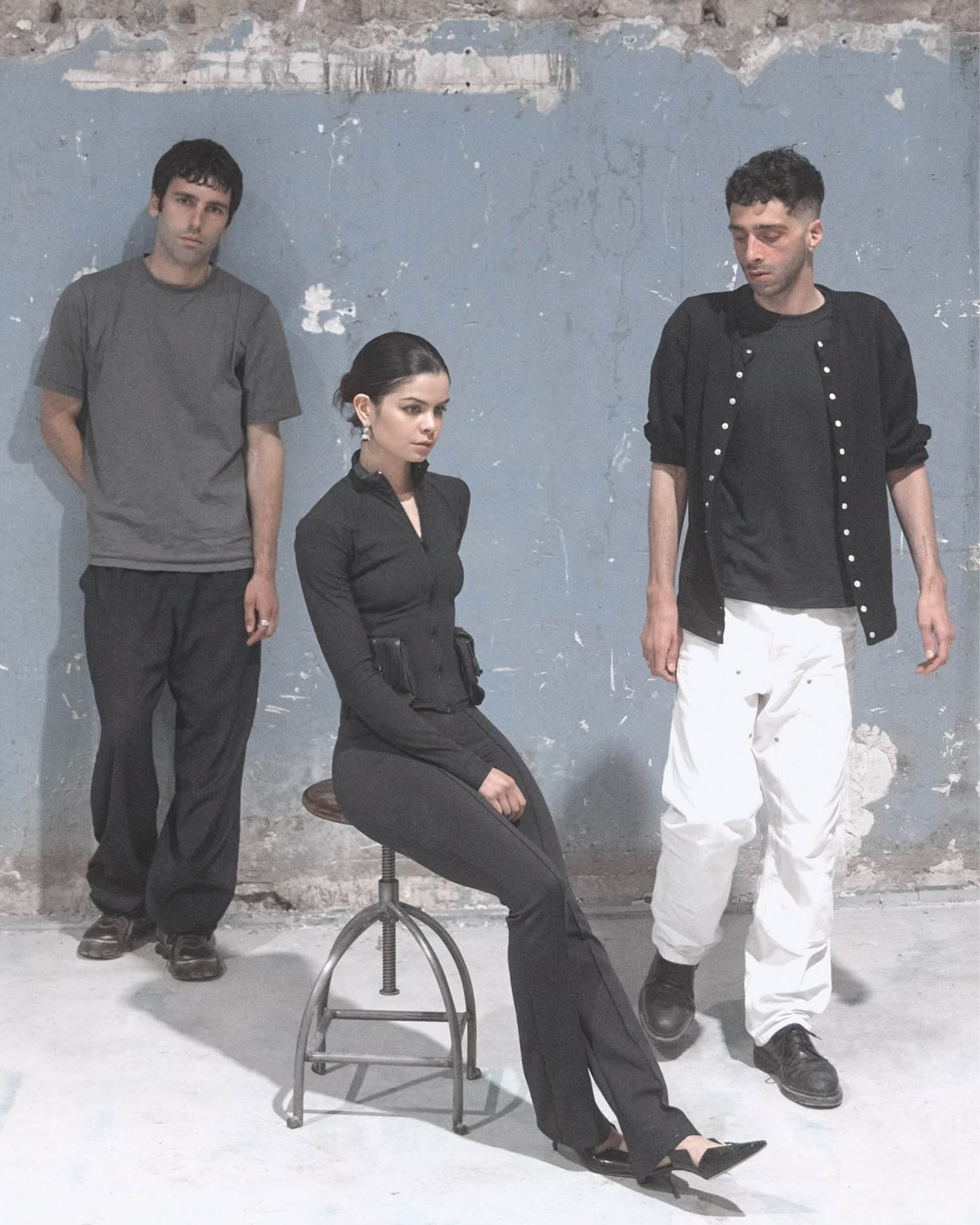
Portrait Khalil Ghani
Set design Joris Navarrolpz
Temple Magazine
How did this all come together? Mathilde, what made you want to launch a curatorial project, and how did the idea of working with artists in a duo format come to you?
Mathilde Matteucci
What felt natural was to begin with people from my close circle, artists I love, admire, and with whom I share a certain vision. I had known Adam for a long time and was always frustrated not to see his work exhibited more often. Meeting Tom through him made everything click. Their practices are very different, but there’s something really beautiful in the relationship between them, both artistically and personally, and the show emerged from that connection.
I come from fashion now, but I actually started working in art centers, notably at Villa Noailles, before moving into fashion and image and communication at Coperni. It’s a very caring and generous environment that inspires the way I work, through trust, openness, and collaboration, and I want to extend that energy into other spaces.
Over time, I realized I already had a circle of people whose work and energy I genuinely believe in, and I wanted to build from that. BONDED is really about the bond between people , it’s also my way of living and thinking. Letting relationships guide the curation, rather than starting from a fixed concept.

Temple Magazine
And how does that translate in the show itself? How do you tell the story of a bond that isn't immediately visible?
Mathilde Matteucci
Some works respond to each other in striking ways, through echoes of form, color, or more intuitive logics.
Tom’s series of chairs, presented for this exhibition, unexpectedly brings out the body, in dialogue with Adam’s figures, which lean against each other, face one another, and exist in a state of tension. Forms shift across registers: a chair can almost become an anthropomorphic presence, like wolf-like jaws facing Adam’s dogs. Everything feels deeply physical, rooted in contact and touch. We titled the exhibition Dos Contre Dos, for mutual support but also for the idea of the “back”, what turns and responds. And of course, friends don’t always agree on everything, so we don’t show everything together.

Tom Chatenet
I find that very moving. The title of the exhibition “Dos contre Dos” higlights the posture of the bodies painted by Adam and the positions suggested by my chairs in my paintings. The figures in Adam’s paintings are seated, kneeling, or on all fours. A chair shapes the body — it puts you in a certain position, even a certain mood. In that way, it becomes the imprint of a body in space. The encounter between our paintings is as much about balance as it is about confrontation.
Temple Magazine
And the works, was this something you already had, or did your paintings find each other by chance?
Adam Bilardi
Completely by chance. Tom and I started painting together around 2015, the year we met. We went to different schools but always kept communicating, he was in Lyon, I was in Cergy, then he left for Belgium. Despite the distance, we kept sending each other pictures of work in progress, our crises, our doubts and our stars. Painting is the foundation of our relationship, even though our two approaches are very different. Mine comes from something more personal — it's a bit like a journal. It speaks about my relationships, about the bonds we have with others and with ourselves.
Tom Chatenet
My painting speaks primarily about painting itself (materiality, colors and shapes). Adam's work relates to the intimate, relationship and personal experience, mine doesn't come from that at all. The idea of Dos contre dos, it’s not dos à dos, backs turned in opposition, it's dos contre dos, backs against back. There's an ambivalence in that: what brings us close, and also what sets us apart. Throughout our whole relationship we've had moments of agreement and moments of complete disagreement, and we've always cared about telling each other what we really think, sometimes arguing over questions where we were nowhere near aligned. We want the show to render that dialogue — both what unites us and what opposes us.

Mathilde Matteucci
Adam’s painting speaks to me through the body and a certain erotic charge. There’s something very cinematic about it that reminds me of Kenneth Anger’s films, or even esotericism, like tarot card imagery. Tom's work traces the body and the marks it leaves behind. In his chairs, which at first seem like inert objects, there is something highly charged: posture, absence, and at the same time a strong sense of presence.
Temple Magazine
How does space itself influence all of this? Because it's not a traditional white cube, which presumably gives you a different kind of freedom.
Mathilde Matteucci
It’s a place in transition — once a climbing wall, and soon something else. We were also told it might have been Degas’s former house, which is a beautiful coincidence. The space is raw and generous, without a fixed identity, which is exactly what makes things possible. Its not an institution or an art space which invites freedom in the hang.
Temple Magazine
Adam and Tom, has working on this show given you an appetite to pursue more collaborative work?
Adam Bilardi
I’ve always worked more or less on my own, while maintaining a very close connection with Tom and few other artist friends. But this project definitely made me want to approach my practice from a more collaborative perspective.
Tom Chatenet
The funny thing is that it’s actually the opposite for me, because I’ve always tended to function through group dynamics and dialogue. Even with Adam, at a distance, we always kept that exchange going. For me, it’s something very precious, especially as this kind of dynamic feels increasingly rare today. What I find great with Adam is that we don’t always agree, yet we exchange a lot, and there is a real closeness in the work.
We’re not at all like Philip Guston and Morton Feldman, who drifted apart over artistic disagreements, or Francis Bacon, who said he sometimes couldn’t say what he really thought for fear of losing his friends by being honest. It’s not easy to disagree with someone you care about while still maintaining a deep and generous dialogue.
Temple Magazine
And how do you want to develop this going forward? You mentioned another painter friend earlier as a possible next step.
Mathilde Matteucci
It can be a natural next step, but I don’t want to box myself in. What matters is the bond, the medium can shift, photography, sculpture, anything.The idea is to keep doing shows in different spaces, always starting from intimacy and trust, and letting that shape something new each time.
Adam Bilardi
There are a lot of differences between Tom and me, but we both paint, on canvas, with brushes. Ultimately we're both completely driven by love for what we do. And I think that's also why the project makes sense.
Temple Magazine
The idea being that working within a shared structure creates dialogue, rather than starting from a shared ideology.
Mathilde Matteucci
What matters most to me, and what has shaped the curatorial gesture, is revealing something usually invisible between two artists: their intimacy. Not their practice or formal similarities, but the bond itself.
Today, it feels more important than ever to create with people you love, and to see what can emerge from those connections. That’s also how I make my life easier — no ego, just fun.
Temple Magazine
Are all the pieces in the show for sale, and how do you position yourself in relation to a gallery model?
Mathilde Matteucci
Everything is for sale, to support the artists involved. Each exhibition will exist within a defined timeframe and space, but the idea is very much to continue — to extend these links and open new collaborations or other formats. The project is about showing what creatives truly want to show. It’s a dialogue and teamwork — everything is discussed, nothing is imposed. It’s also self-managed and built on trust with people who genuinely want to support the project. There’s something both fragile and exciting in that, and in continuing to make things this way.
Graphic design Adulte Adulte
Portrait Khalil Ghani
Set design Joris Navarrolpz

